
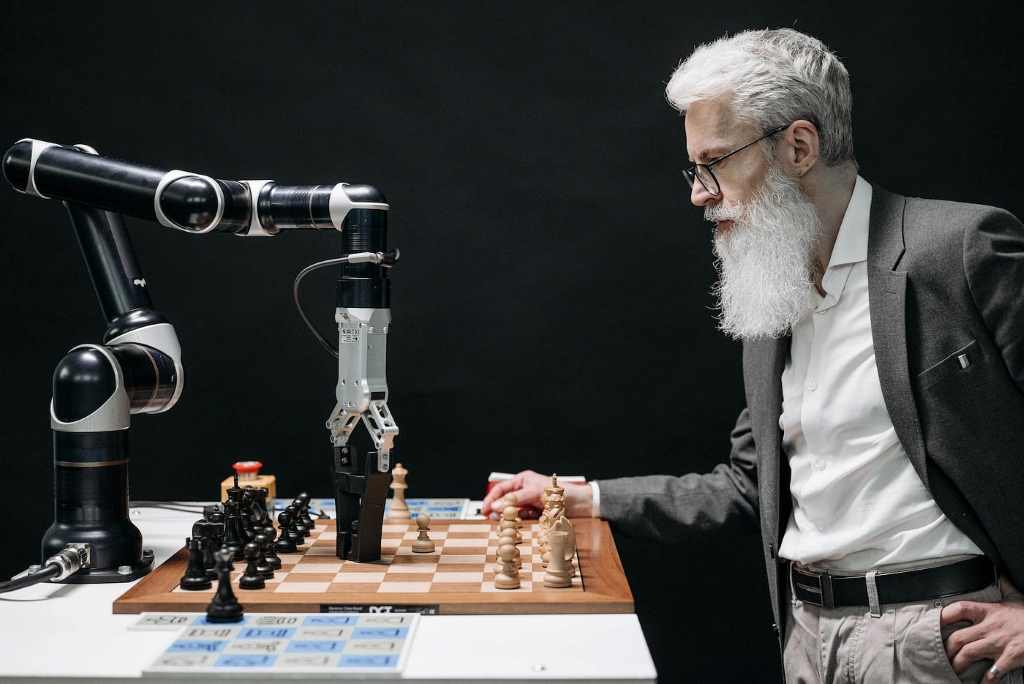
We live in an age where technology is advancing at a breakneck pace. Every day, we witness new innovations that reshape our world. One of the most exciting and, perhaps, terrifying developments is the rise of artificial intelligence (AI). These machines that learn, once mere tools, are now learning to think, reason, and even create. It’s a thrilling prospect, but it also raises a profound question: Will these intelligent machines eventually surpass us?
What is Artificial Intelligence?
Let’s start with the basics. Artificial intelligence isn’t about building robots that look like humans. It’s about creating computer systems that can perform tasks that typically require human intelligence. This includes things like learning, reasoning, problem-solving, perception, language understanding, and decision-making.
Imagine teaching a computer to recognize a cat. You show it thousands of images of cats. Over time, the computer learns to identify features like whiskers, tails, and pointy ears. That’s machine learning in action. It’s like teaching a child to recognize a cat by showing them lots of pictures.

How Smart Are Machines?
Today’s AI systems are incredibly impressive. They can beat humans at chess, Go, and even complex video games. They can drive cars, diagnose diseases, and compose music. It’s like having a super-intelligent assistant at your fingertips.
But let’s not get carried away. These machines that learn are still tools. They’re excellent at specific tasks, but they lack something fundamental: common sense. They can process information incredibly fast, but they don’t truly understand the world around them.
For example, a machine can recognize a stop sign, but it might not understand why it’s important to stop. A human, on the other hand, understands the concept of danger, the rules of the road, and the potential consequences of not stopping.
The Limits of Artificial Intelligence
Despite their impressive abilities, AI systems have limitations. They rely on vast amounts of data to learn, but they often struggle with new or unexpected situations. They can be fooled by adversarial attacks, where malicious actors manipulate input data to trick the AI. And, perhaps most importantly, they lack the emotional intelligence and creativity that make us human.
Consider a self-driving car. It can navigate through traffic, avoid obstacles, and park itself. But what if it encounters a situation it hasn’t been trained for, like a child chasing a ball into the street? A human driver would instinctively react, but a machine might freeze or make a fatal error.
Will Machines Ever Rule the World?
The idea of machines taking over the world is a common trope in science fiction. But is it realistic? Experts disagree. Some believe that we’re on the brink of an AI singularity, where machines become so intelligent that they surpass human control. Others argue that we’re nowhere close to that point and that AI will always be a tool, not a threat.
The truth probably lies somewhere in between. AI is developing rapidly, and it’s essential to be aware of the potential risks. But it’s also important to remember that AI is created by humans. We have the power to shape its development and ensure that it benefits society.
The Future of AI
So, what does the future hold? It’s difficult to say for sure, but one thing is clear: AI is here to stay. It will continue to transform our lives in countless ways, from healthcare to transportation to entertainment.
The key is to approach AI with a mix of excitement and caution. We should celebrate its potential to solve some of the world’s most pressing problems, but we should also be mindful of its limitations and risks.
By working together, humans and machines that learn can create a future where technology enhances our lives without threatening our humanity.