
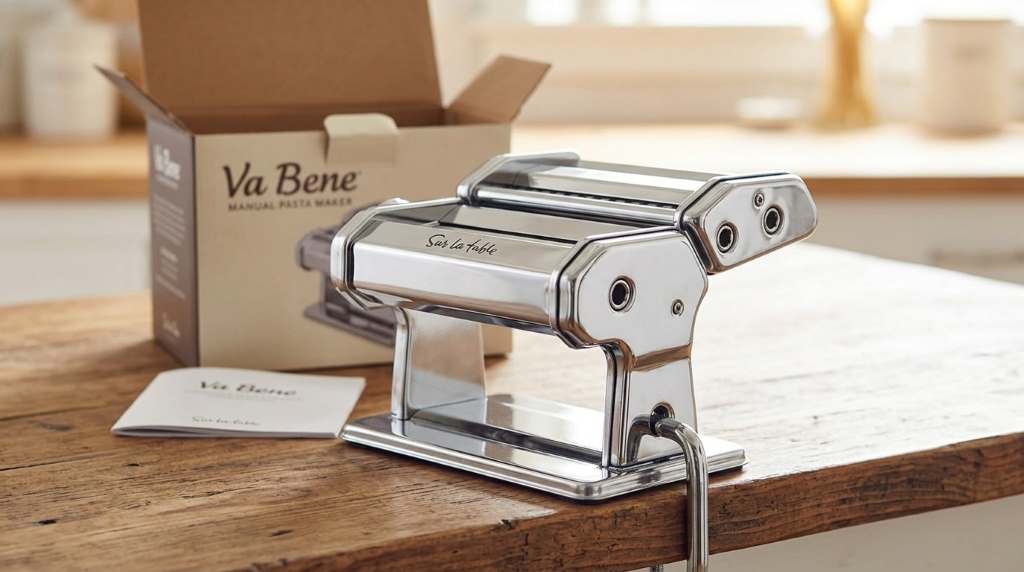
The Sur La Table Va Bene is a strong manual pasta maker for home cooks who value control, simplicity, and fresh texture. Its nine thickness settings and stainless steel construction make it a serious option, especially for weekly pasta making. In this review, the hand-crank pasta machine gets a practical evaluation focused on setup, rolling, cutting, cleanup, and everyday usability.
Key Takeaways
- The Va Bene offers nine adjustable thickness settings for flexible pasta preparation.
- Its stainless steel construction feels more substantial than many entry-level machines.
- The clamp provides essential counter stability during repeated rolling sessions.
- The manual crank gives you direct control over sheet thickness and feeding speed.
- The machine works well for spaghetti, fettuccini, lasagna sheets, and dumpling skins.
- Hand washing adds cleanup time, but careful dry cleaning protects the rollers.
What Makes The Sur La Table Va Bene Different?
The Va Bene takes a deliberately simple approach to homemade pasta. Instead of adding motors, electronics, or complicated controls, it focuses on mechanical consistency. That design suits cooks who enjoy controlling every stage of pasta preparation.
Sur La Table positions the machine as a kitchen essential rather than a specialty appliance. The nine thickness settings provide enough flexibility for thin noodles and substantial pasta sheets. Consequently, one machine can handle several familiar pasta styles.
The current model also carries a distinctive juniper green finish that separates it visually from traditional chrome machines. However, appearance alone does not justify the purchase. The important question involves how reliably the rollers handle dough during repeated use.
The machine weighs roughly 2.1 kilograms according to current product listings. That weight keeps it manageable while still providing useful stability during operation. Therefore, it offers a reasonable balance between portability and countertop control.
Design And Build Quality: Is It Built To Last?
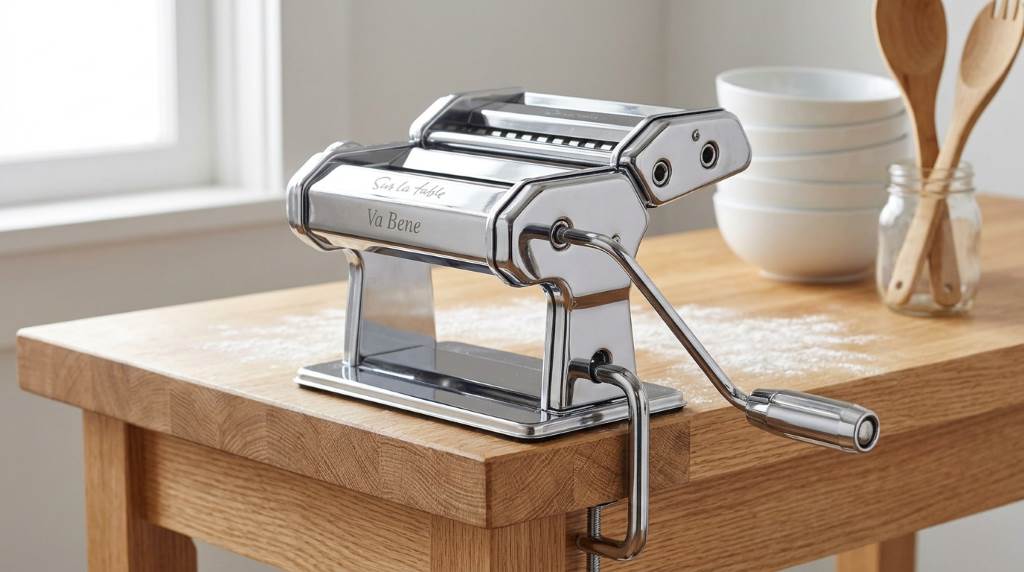
The Va Bene uses stainless steel prominently across its working components. That material choice matters because pasta dough repeatedly contacts the rollers and cutting mechanisms. Additionally, stainless steel gives the machine a more substantial feel during operation.
The overall construction feels purpose-built rather than decorative. The roller assembly remains straightforward, while the removable handle keeps the operating mechanism easy to understand. For cooks who dislike complicated kitchen gadgets, that simplicity becomes a genuine advantage.
One practical detail deserves attention: the machine requires a secure countertop edge. Before rolling dough, position the clamp carefully and tighten it firmly. A stable base prevents unnecessary movement and makes long sheets easier to manage.
The finish also deserves a practical rather than purely aesthetic assessment. The juniper green exterior looks attractive enough for countertop storage. However, cooks with limited space may prefer storing the machine after each session.
If you enjoy comparing kitchen tools through measurable design details, even something as unrelated as an accurate paint matching tool illustrates the same principle. Useful equipment should solve its intended task consistently without adding unnecessary complexity.
Rolling Performance: How Well Does Va Bene Flatten Dough?
The rolling stage determines much of the final pasta quality. A good machine should produce increasingly thinner sheets without tearing, buckling, or creating uneven edges. The Va Bene performs best when you prepare the dough correctly before feeding it through.
Start with the widest setting and pass the dough through several times. Then, gradually reduce the thickness setting after each successful pass. This approach develops a smoother sheet and reduces the chance of sudden tearing.
The nine-position adjustment system gives home cooks meaningful control over the final texture. Thick settings work well for lasagna and dumpling wrappers. Meanwhile, thinner settings suit delicate noodles and lighter pasta dishes.
However, the machine cannot compensate for poorly prepared dough. Dough that feels excessively wet can stick between the rollers. Conversely, extremely dry dough may crack before reaching the desired thickness.
Flour quantity also requires restraint. Too much flour creates a dry surface and can affect the finished pasta texture. Instead, dust lightly whenever the sheet begins sticking during rolling.
The crank feels most comfortable when you maintain a steady rhythm. Avoid forcing the handle through particularly thick dough. Instead, return to a wider setting and gradually reduce the thickness again.
Cutting Performance: Spaghetti, Fettuccini, And More
Rolling creates the foundation, but cutting determines the pasta’s final personality. The Va Bene includes cutting functionality designed for familiar noodle styles. That makes the machine more versatile than a basic sheet roller.
The cutting attachments work best after you achieve an even sheet. Uneven dough produces inconsistent strands, regardless of cutter quality. Therefore, spend more time perfecting sheet thickness before switching to the cutting stage.
Spaghetti-style strands suit lighter sauces, tomato preparations, and simple garlic-based dishes. Fettuccini offers greater surface area and works particularly well with creamy or meat-based sauces. Meanwhile, wide sheets provide excellent material for lasagna and filled pasta.
The machine also supports dumpling skin preparation, which expands its usefulness beyond traditional Italian dishes. That flexibility can make the purchase more worthwhile for cooks who prepare several cuisines.
For comparison, powered extrusion machines follow a very different approach to pasta production. A detailed Cuisinart PE-50 extruder review highlights why extrusion and roller-based machines suit different cooking preferences.
How Easy Is The Va Bene For Beginners?
The Va Bene has a manageable learning curve, although beginners should expect a few imperfect batches. Pasta making involves dough consistency, flour control, rolling technique, and cutting technique. Fortunately, the machine itself does not introduce unnecessary complexity.
First, secure the machine before preparing the dough for rolling. Next, divide the dough into manageable portions rather than feeding one oversized piece. Smaller portions provide better control and reduce strain during cranking.
Then, flatten each portion slightly by hand before inserting it between the rollers. This simple step helps the machine accept the dough smoothly. It also reduces pressure on the roller mechanism.
Beginners should resist the temptation to chase extremely thin pasta immediately. Start with moderate thickness and learn how the dough responds. Once the technique becomes familiar, move toward thinner settings.
Another useful habit involves preparing a drying area before cutting the pasta. Fresh strands can stick together quickly when they remain in a pile. A pasta rack, clean tray, or lightly floured surface can solve that problem.
What Happens With Different Types Of Dough?
Traditional egg pasta provides a useful baseline for evaluating a manual roller. Its texture should remain pliable without becoming excessively sticky. When properly kneaded, the Va Bene can gradually transform that dough into smooth sheets.
Whole wheat dough presents a greater challenge because its structure differs from refined flour dough. The bran can create a rougher texture and make sheets less elastic. Consequently, slower rolling and careful hydration become more important.
Spinach pasta can also behave differently because added moisture changes the dough’s consistency. You may need additional flour during preparation. However, avoid adding large amounts at once because excessive flour can produce tough pasta.
Gluten-free dough requires even more attention because gluten normally provides elasticity and structure. Such mixtures may tear more easily during aggressive thinning. Therefore, use conservative thickness changes and handle sheets gently.
The Va Bene’s mechanical design remains useful across these variations. Nevertheless, dough formulation still determines much of the final result. No manual machine can replace proper mixing, kneading, resting, and hydration control.
Clamp Stability And Cranking Comfort
Counter stability sounds minor until you roll several batches. A machine that shifts during operation quickly becomes frustrating. The Va Bene’s included clamp provides the necessary foundation for normal home use.
However, countertop thickness and edge design can influence the clamping experience. Position the machine where the clamp can fully engage the surface. Also, check stability before feeding your first dough portion.
The removable crank keeps operation intuitive. One hand turns the handle while the other guides the pasta sheet. That two-handed process gives you more control than many beginners initially expect.
Long pasta sheets can require repeated passes, which naturally creates some arm fatigue. This limitation affects every manual pasta maker. Therefore, the Va Bene makes more sense for cooks who enjoy hands-on preparation.
If you regularly prepare large quantities for parties, a motorized machine may save considerable effort. For smaller household batches, however, manual operation remains reasonably practical. The choice ultimately depends on how often you make pasta and how much you value control.
Cleaning And Maintenance: The Part Most Buyers Overlook
Cleaning should influence your buying decision because pasta dough can leave small particles around rollers and cutters. The Va Bene requires careful hand cleaning rather than casual dishwasher treatment. That requirement demands more attention after every session.
Allow remaining flour and dough particles to dry before brushing them away. A dry brush can remove debris from difficult areas without introducing unnecessary moisture. Avoid soaking the machine because water can reach mechanical components.
Never scrape the rollers aggressively with sharp metal tools. Scratches can create rough surfaces that collect dough during future sessions. Instead, use appropriate brushes and follow the manufacturer’s care guidance.
The cutters also deserve individual attention. Remove accessible attachments when necessary and clean away flour before storage. Completely dry every removable component before putting the machine away.
Good maintenance does more than preserve appearance. It helps keep rollers moving smoothly and reduces contamination from old dough residue. As a result, a few extra cleaning minutes can protect long-term performance.
Pros And Cons After Practical Evaluation
The Va Bene succeeds because it concentrates on the fundamentals. It provides adjustable thickness control, manual operation, cutting capability, and a sturdy countertop setup. Those features cover the needs of most home pasta enthusiasts.
Still, no manual pasta maker suits every kitchen. The machine demands physical effort and requires deliberate cleaning after use. Its countertop footprint can also become inconvenient in compact kitchens.
Key advantages:
- Nine thickness settings provide useful control across multiple pasta styles.
- Stainless steel construction gives the machine a solid, durable feel.
- Manual operation provides direct feedback while rolling dough.
- Cutting functions expand the machine beyond simple pasta sheets.
- Juniper green styling offers a distinctive alternative to traditional finishes.
- The straightforward mechanism remains approachable for beginners.
Key limitations:
- Manual cranking becomes tiring during large pasta batches.
- Hand cleaning takes longer than wiping down some powered machines.
- Countertop stability depends partly on proper clamp placement.
- Beginners need practice to master dough consistency and thickness changes.
- Storage requires dedicated cabinet or countertop space.
Who Should Buy The Sur La Table Va Bene?
The Va Bene suits home cooks who want fresh pasta without purchasing a powered appliance. It also fits people who enjoy traditional cooking techniques and hands-on preparation. For occasional weekend pasta making, its simplicity can feel refreshing.
It makes particular sense for cooks preparing lasagna, fettuccini, spaghetti, and dumpling skins. The adjustable rollers provide enough flexibility for these common applications. Furthermore, the manual mechanism keeps the learning process transparent.
However, frequent high-volume pasta makers should consider their physical workload first. Rolling multiple batches manually can become tiring during gatherings or meal preparation. A motorized machine may provide better productivity in that situation.
Likewise, extremely small kitchens should consider storage before purchasing. The machine needs a secure working position and accessible storage afterward. Measure your available cabinet and countertop space before ordering.
How To Get Better Results From The Va Bene
Start by preparing dough with the correct hydration rather than relying on flour during rolling. Knead until the dough becomes smooth and cohesive. Then allow it to rest before sending it through the rollers.
Divide the dough into smaller portions for easier handling. Flatten each portion slightly before inserting it into the widest roller setting. This method reduces sudden pressure and keeps the sheet more manageable.
Fold the sheet when necessary during early passes. Folding helps create a more uniform structure and improves the sheet’s shape. Afterward, continue reducing the thickness one setting at a time.
Dust only when needed because excessive flour can dry the dough. Once the sheet reaches its target thickness, cut it promptly. Then separate the strands and prevent them from forming dense clumps.
Finally, clean the machine before storing it. A few minutes of maintenance can prevent dried dough from becoming tomorrow’s problem. That habit also makes your next pasta session faster and more pleasant.
Final Verdict: Is The Sur La Table Va Bene Worth It?
The Sur La Table Va Bene earns a strong recommendation for home cooks who prefer manual pasta making. Its nine thickness settings, practical cutters, stainless steel construction, and straightforward operation create a balanced package.
It does not eliminate the work involved in making fresh pasta. Instead, it makes that work more controlled and predictable. That distinction matters because the machine supports your technique rather than attempting to replace it.
The biggest strengths involve versatility and mechanical simplicity. Meanwhile, the main compromises involve manual effort, cleaning, and storage. For moderate household use, those limitations remain reasonable.
Ultimately, buy the Va Bene if you want fresh pasta as an enjoyable cooking process. Choose a powered alternative if speed and high-volume production matter more. If hands-on control matters most, the Va Bene deserves serious consideration.
Ready to make fresh pasta at home? Compare your available counter space, preferred pasta styles, and expected batch size, then decide whether the Va Bene matches your cooking routine.
Frequently Asked Questions
Is the Sur La Table Va Bene pasta maker good for beginners?
Yes, its straightforward controls and nine thickness settings make the machine approachable for beginners.
How many thickness settings does the Va Bene have?
The Va Bene provides nine adjustable thickness settings for different pasta preparations.
Can the Va Bene make spaghetti and fettuccini?
Yes, its cutting functionality supports common pasta shapes including spaghetti and fettuccini.
Is the Sur La Table Va Bene dishwasher safe?
No, careful hand cleaning is recommended to protect the machine and its working components.
Is the Va Bene worth buying for occasional pasta making?
Yes, it offers useful versatility and manual control for cooks making fresh pasta periodically.