
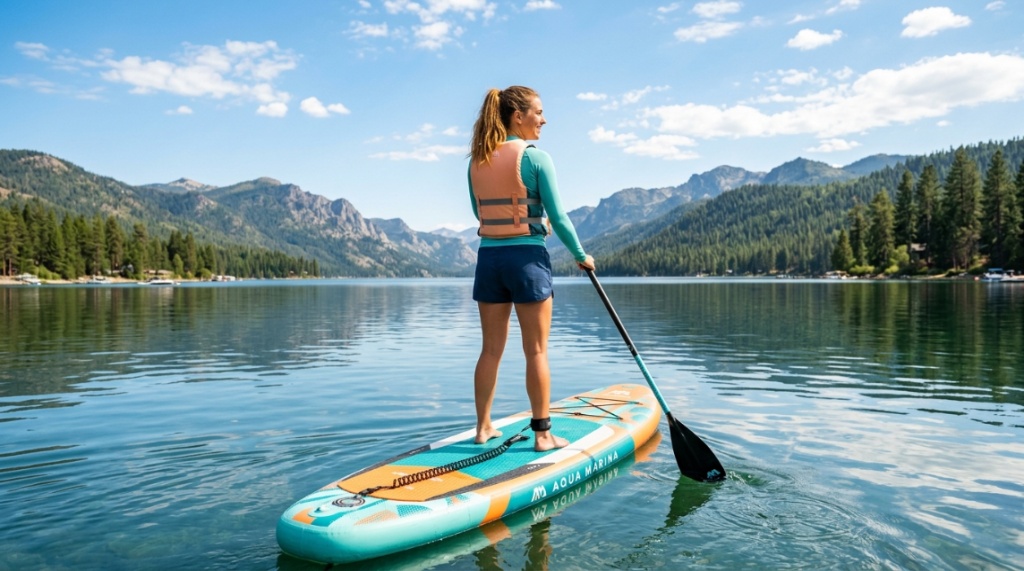
You’re staring at a wall of brightly colored inflatable paddle boards online, and the options are dizzying. Prices range from “too good to be true” to “I could buy a used car for that.” As a beginner, the fear of making a costly mistake is real.
You don’t want a wobbly, slow board that deflates on the water, but you also don’t need a pro-level race board. The good news? Finding the perfect beginner SUP board comes down to understanding a few key specs, not your budget. This guide cuts through the marketing fluff so you can buy your first inflatable paddle board with total confidence, knowing exactly what to look for and what to avoid.
What Makes an Inflatable Board the Best Choice for a Beginner?
Inflatable paddle boards (iSUPs) are the top choice for beginners because they are lighter, safer, and far more portable than hard boards. A rigid epoxy board can hurt if you fall on it, is hard to transport without a roof rack, and is prone to cracking. An iSUP packs into a backpack, weighs 20–25 pounds, and provides a soft, stable platform. For a new paddler, this means you can store it in a closet, travel with it easily, and practice falling without risk of injury to yourself or the board. The forgiving nature of the inflatable material also allows for higher volume, which translates directly into better stability for learning.
How Do I Choose the Right Size and Volume?
For a first board, look for a volume of at least 200 liters and a length between 10’6” and 11’6”. Volume determines how much weight the board can float while keeping you dry. A common mistake is buying a board that is too small. As a rule of thumb, your weight (in kg) plus your gear weight (approx. 10 kg) should be less than 70% of the board’s volume. Here is a simple sizing guide to follow:
| Your Weight | Recommended Board Length | Minimum Volume |
|---|---|---|
| Under 150 lbs (68 kg) | 10’0” – 10’6” | 200 liters |
| 150 – 200 lbs (68 – 90 kg) | 10’6” – 11’0” | 250 liters |
| 200 – 250 lbs (90 – 113 kg) | 11’0” – 11’6” | 300 liters |
| Over 250 lbs (113 kg) | 11’6” – 12’0” | 350+ liters |
Wider boards (32” to 34”) offer more stability. A 34” wide board is like a pontoon boat—very hard to tip over. This width is ideal for larger paddlers or those who plan to bring a dog or child along. Thickness also matters; 6-inch thick boards are standard and provide enough rigidity for most beginners. Avoid boards thinner than 5 inches as they tend to flex underfoot.
Why Thickness and Width Matter More Than Length
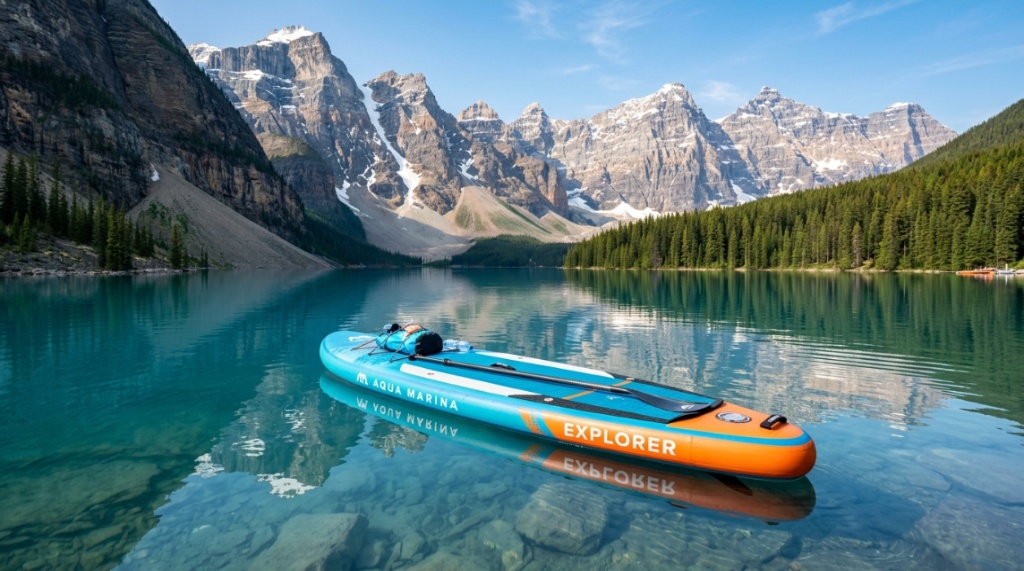
When you are learning, stability is king. Width and thickness directly impact how steady the board feels. A board that is 6 inches thick and 33-34 inches wide will feel like a solid platform. Do not sacrifice width for speed as a beginner. You can buy a longer, narrower board later when you want to go faster. For now, choose the stable option.
Which Construction Features Should a Beginner Look For?
You want a board with a high-quality drop-stitch core and at least a double-layer PVC construction. Drop-stitch is the technology that allows the board to hold its shape under high pressure (12-15 PSI). Cheaper boards use single-layer PVC which is prone to punctures and feels like a pool toy. Look for “military-grade” or “woven” PVC. The best beginner boards also feature a reinforced rail (the edge of the board) to protect against dock rubbing and accidental scrapes.
Key features to prioritize:
- Fins: A center fin with two smaller side fins (thruster setup) provides the best tracking for beginners. Avoid boards with a single, permanent fin that is not removable.
- Handle: Look for a centered, webbed carry handle that does not rub your knuckles.
- D-ring mounts: You need at least four D-rings on the nose for a bungee cargo system to hold a dry bag or cooler.
- Valve: H3 valves (same as standard pump valves) are easy to use and replace.
Can a Cheap Board Be Trusted for Safety and Durability?
Yes, but only if you know the brand’s reputation and material quality. You can find a reliable beginner SUP board for under $500, but you must be vigilant. The danger with ultra-cheap boards (under $300) is delamination—where the PVC layers separate from the drop-stitch threads. This creates a bubble or warp that ruins the board. A well-reviewed budget board from a brand that specializes in water sports is safer than a generic board from a non-sporting retailer.
Always check the warranty. A good entry-level board should come with at least a 2-year warranty against manufacturing defects. Also, verify that the pump included is a dual-action pump. Single-action pumps are exhausting and take forever to inflate a board to the necessary 12-15 PSI. A dual-action pump inflates on both the push and pull stroke, cutting inflation time in half.
Tips to Avoid a “Pool Toy” Purchase
If a listing avoids mentioning the PSI rating, material density, or drop-stitch quality, walk away. Legitimate boards always list their working pressure (PSI). Also, read real photos in the reviews. Stock photos can hide terrible valve placement or poor rail construction.
What Pump and Accessories Should Come With the Board?
A complete beginner package must include a dual-action hand pump, a coiled leash, a fin set, a repair kit, and a carry backpack. Do not buy a board that makes you purchase these items separately, as it almost always ends up costing more and the quality of add-on accessories is often poor. The backpack is critical—it should be a large, wheeled or well-padded backpack that can fit the rolled board, pump, and paddle. Many beginners are shocked when a cheap “free” backpack barely fits the board.
Your paddle is just as important as the board. Look for a three-piece, adjustable aluminum paddle (or fiberglass if you can swing it). The blade should be slightly offset from the shaft (dihedral shape) to prevent flutter. Set the paddle length so that when you stand it on end, the handle is at your wrist.
Is a 10-Foot Board Long Enough for Learning?
Yes, a 10-foot board is an excellent length for most beginners. It is short enough to be maneuverable and easy to turn, but long enough to track reasonably straight. The only exception is if you weigh over 200 lbs. In that case, an 11-foot board provides the necessary volume to keep you floating high and dry. For children or light adults (under 130 lbs), a 9’6” board can be very fun and even easier to handle. Do not feel pressured to buy a 12-foot board. That length is for touring and racing, not for your first time on the water.
How Do I Know If a Board Will Be Rigid Enough?
Rigidity comes from two factors: the PSI you pump it to and the internal weave density. Never inflate a board to less than the recommended PSI (usually 12-15 PSI). You will feel a bend or “oil canning” effect under your feet if the board is under-inflated. A quality board will feel like a wooden floor when fully inflated. To test this before buying, look for user reviews that specifically mention “no flex” or “feels very solid.” Some budget boards require 15 PSI to feel rigid, whereas higher-end brands might feel stiff at 12 PSI. Always err on the side of a higher recommended PSI (15 PSI) for maximum stiffness.
Can I Take a Stand Up Paddle Board in the Ocean as a Beginner?
Absolutely, but you need an all-water board, not a dedicated flatwater board. Look for a board with a pointed or semi-pointed nose (a displacement hull) that can cut through small chop and waves. Avoid boards that are completely square and flat on the nose, as they will slap against every wave. More importantly, you must have a quality leash. If you fall in the ocean, your board can quickly drift away. A good coiled leash attaches to your ankle (or calf) and the board’s leash plug. For ocean use, a thruster fin setup (three fins) is also beneficial for stability in side currents.
When Is the Best Time to Buy an Inflatable Paddle Board?
The best time to buy is during the off-season (October through March) or during major sales events like Black Friday and Memorial Day. However, if you want to buy in the summer when demand is highest, you will still find deals, but you need to act fast when a restock happens. Many brands sell out of their entry-level boards by June. If you wait until August, you may find clearance sales, but the selection of sizes and colors is limited. For the best prices, sign up for email notifications from reputable gear review sites that track price drops.
How to Conduct the “Paddle Test” Before Your First Trip
Before you head to the water, do a dry run in your living room or backyard. Inflate the board completely to the recommended PSI. Attach the fin. Adjust the paddle to the correct height. Practice standing up in the middle of the board with your feet shoulder-width apart. This builds muscle memory. Then, check every D-ring and the leash plug for security. Many people skip this step and arrive at the lake only to realize their pump connection is loose or they forgot the fin screw. A ten-minute test at home saves an hour of frustration at the water.
One of the best features of an inflatable setup is the front cargo bungee system. It lets you secure dry bags, water bottles, or even specialized angling gear if you plan to fish from your board. If you do head out to catch dinner, make sure you pack the Best Fishing Landing Net for Any Trip right under your deck straps for easy access
Frequently Asked Questions
How long does an inflatable paddle board last?
With proper care—rinsing with fresh water, drying completely, and storing out of direct sunlight—a quality iSUP will last 5 to 10 years. The PVC material is very durable if not exposed to UV rays for extended periods.
Can I use a regular air pump to inflate my paddle board?
No. Standard air pumps cannot reach the 12-15 PSI required for a rigid paddle board. You must use the specialized high-pressure pump that comes with the board. Some electric pumps exist but are an additional purchase.
Is it hard to stand up on an inflatable paddle board?
Not if you choose the right board. A board that is 32-34 inches wide and 6 inches thick provides a very forgiving, stable platform. Start by kneeling, then place one foot, then the other, keeping your knees slightly bent.
Do I need a roof rack for an inflatable paddle board?
No. One of the biggest advantages of an inflatable board is that it packs into a backpack. You can fit it in any car trunk or back seat. You only need a roof rack if you have a hard board.
Can I leave my inflatable paddle board inflated?
It is best to deflate and store your board after each use. Leaving it inflated for days in the sun can put stress on the seams and weaken the material. For short storage (overnight), it is fine if kept in the shade.
What is the weight limit for inflatable paddle boards?
Most beginner boards have a weight limit of 220-275 lbs. Some boards designed for bigger paddlers or tandem use can handle up to 400 lbs. Check the “max rider weight” spec carefully if you are a larger paddler.
How do I clean my inflatable paddle board after saltwater use?
Rinse it thoroughly with fresh water using a garden hose. Gently scrub any salt residue from the deck pad and fins. Dry the board completely before rolling it up to prevent mold and mildew growth.
Conclusion
Buying your first inflatable paddle board is exciting, but you do not need to overthink it. Focus on width (32-34 inches), volume (200L+), and construction quality (drop-stitch, double-layer PVC). Ignore flashy marketing jargon and prioritize stability over speed. A great entry-level board will feel like a floating carpet—steady, safe, and fun. Now that you know exactly what specs matter, you can confidently compare models and make a purchase that matches your weight, your local water conditions, and your budget. Grab your gear, inflate that board, and get ready to discover why stand up paddling is one of the most peaceful and rewarding sports you can learn.