
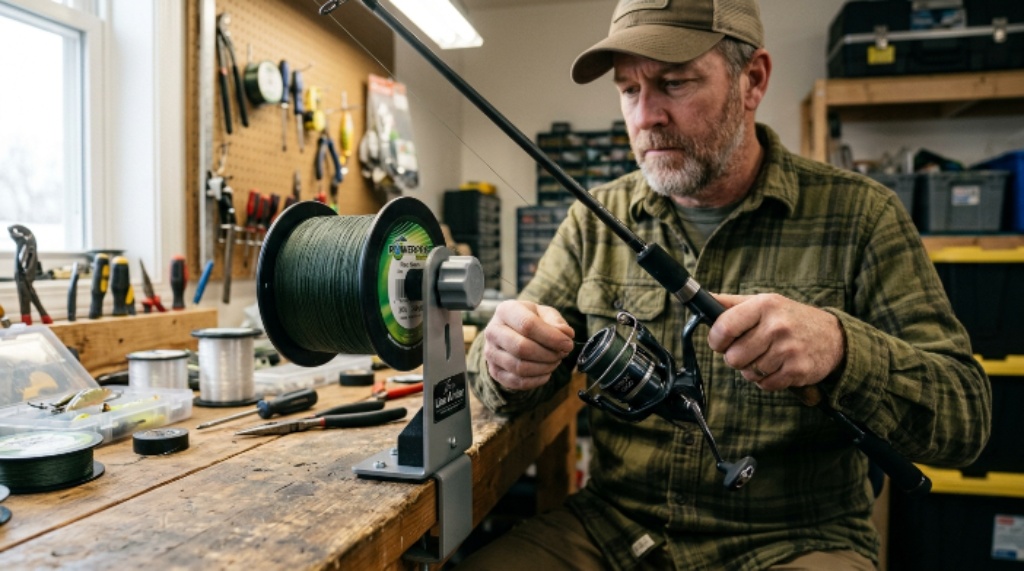
Few things ruin a fishing trip faster than tangled, twisted line. If you have ever stood at the water’s edge fighting a bird’s nest of monofilament, you already know how important proper spooling is. The right spooler makes a huge difference. It loads your line evenly, reduces memory and twist, and gets you fishing faster. This guide helps you find the best spooler for spinning reels in 2026, whether you are a weekend angler or a seasoned pro.
Why the Right Spooler Changes Everything
Most anglers spend a lot of time choosing rods, reels, and lures. However, very few give much thought to how the line gets onto the reel. That is a mistake. A poorly spooled reel creates line twist, reduces casting distance, and increases the chances of tangles mid-cast.
A quality spooler solves all of these problems. It applies consistent tension as the line feeds onto the spool. This keeps the coils tight, even, and properly layered. Additionally, it saves you time. Instead of running line through a partner’s hands or balancing a filler spool on a pencil, a dedicated spooler does the job cleanly every time.
Types of Spoolers Available in 2026
The market offers several styles of spoolers, and each suits a different type of angler. Understanding your options helps you make a smarter purchase.
Portable Hand-Held Spoolers
These compact devices are designed for anglers on the move. They are lightweight, affordable, and easy to store in a tackle bag. You hold the device in one hand and crank your reel with the other. Most models include a tension adjustment knob so you can control how tightly the line loads. They work well for monofilament and fluorocarbon but can struggle slightly with thicker braided lines.
Clamp-On Station Spoolers
These spoolers mount to a table or workbench using a built-in clamp. They hold the filler spool in place and allow you to spool the reel hands-free. Many station models include a line counter display, which is useful if you need to load a specific amount of line. Therefore, they are a popular choice among anglers who re-spool multiple reels at once or manage a small fleet of fishing setups.
Electric Spoolers
Electric models are a newer category that has grown in popularity. They use a small motor to drive line onto the reel at a consistent speed. You simply guide the line and let the machine do the rest. They are the fastest option and produce very consistent results. However, they come at a higher price point and require a power source. For serious anglers who spool frequently, the investment is well worth it.
Manufacturer Spooling Services
Many tackle shops and online retailers offer professional spooling services. You send in your reel or bring it to a shop, and a technician loads the line for you. This is a great option if you are not confident doing it yourself. Additionally, some shops use commercial-grade spooling machines that deliver exceptional results. The downside is cost and convenience — you cannot do it on the water.
Key Features to Look for in a Spooler
Not every spooler is worth your money. Knowing what to look for narrows the field quickly and helps you find a model that fits your needs.
- Adjustable tension control so you can customize line pressure for different line types
- Compatibility with both spinning and baitcasting reels for added versatility
- A secure filler spool holder that does not wobble or slip during use
- Durable construction, ideally with metal components at stress points
- A compact design that fits easily into a tackle bag or storage drawer
- Clear line guides that prevent friction and protect the line coating
These features separate a good spooler from a great one. Choosing a model that checks all these boxes ensures years of reliable use.
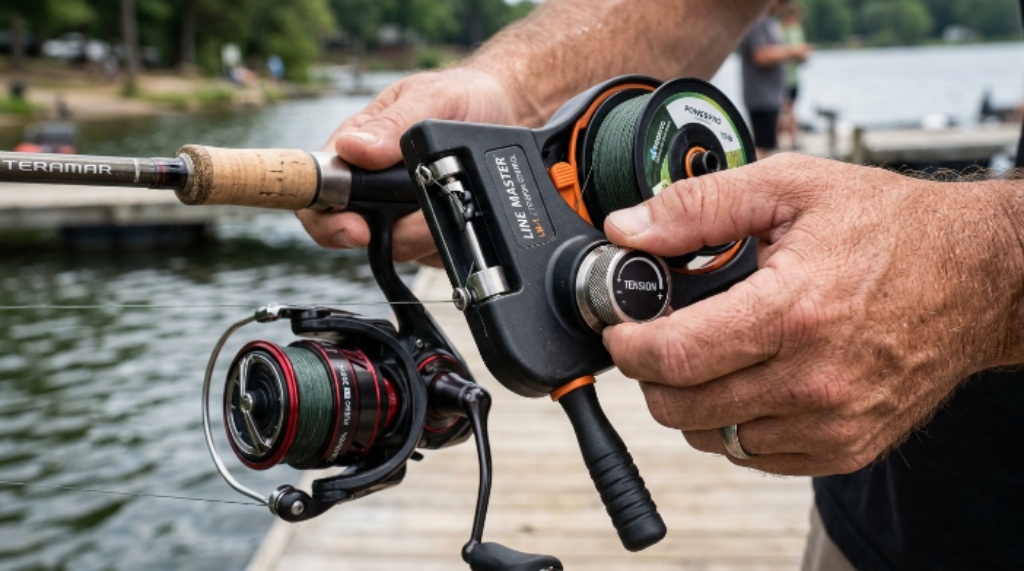
How to Use a Spooler Correctly
Even the best spooler will fail you if used incorrectly. Follow these steps for clean, twist-free line every time.
Thread the Line Properly
Start by running the line through all the rod guides before attaching it to the reel. This is a step many beginners skip. Skipping it creates extra twist because the line has to loop back through the guides after spooling. Thread it correctly from the start.
Match the Spool Direction
This is one of the most important spinning reel tips you will ever learn. The line must come off the filler spool in the same rotational direction that it goes onto the reel spool. If the directions are opposite, twist builds up with every turn of the reel handle. To check, hold the filler spool face-up and watch which way the line unwinds. Match that direction to the way your reel rotates.
Apply Steady Tension
Keep the line under light but consistent tension as it feeds onto the reel. Too loose and the line will dig into itself under pressure. Too tight and you risk stretching the line before it even sees the water. Most spoolers have a tension knob for exactly this reason. Start at a medium setting and adjust from there.
Stop Before the Spool is Full
Leave about one-eighth of an inch of space between the line and the lip of the spool. Overfilling the spool causes line to spill off freely during a cast, which leads to tangles. Under-filling reduces casting distance. That small gap is the sweet spot for spinning reels.
Matching Your Spooler to Your Line Type
Different line types behave differently during spooling. A spooler that works perfectly with monofilament may not perform as well with braid.
Monofilament is forgiving and easy to spool. Almost any spooler handles it well. Fluorocarbon is stiffer and has more memory, so higher tension is often needed. Braided line is the trickiest. It has almost no stretch and cuts into softer materials easily. Look for a spooler with smooth, protected line guides if you fish braid regularly.
Additionally, heavier braid — anything above 30-pound test — may require a station-style or electric spooler to maintain even tension throughout the loading process.
Top Picks to Consider in 2026
You do not need to spend a lot to get a solid spooler. Here is a quick breakdown of what each price range typically offers:
- Under $20: Basic hand-held models with simple tension control. Fine for occasional spooling with monofilament or fluorocarbon.
- $20 to $50: Mid-range station spoolers with better build quality, adjustable tension, and compatibility with all line types including braid.
- $50 to $100: High-end station models with line counters, dual spool holders, and heavy-duty construction.
- Over $100: Electric spoolers and professional-grade units for frequent use or commercial applications.
Therefore, setting a realistic budget before you shop helps you avoid overpaying for features you will never use.
Caring for Your Spooler
A spooler is one of the more overlooked line management tools in any angler’s kit, but it deserves regular care. After each use, wipe down the unit to remove any moisture or line residue. Check the tension knob for smooth operation. Inspect line guides for nicks or rough spots that could damage your line. Store it in a dry place away from direct sunlight.
With basic maintenance, a quality spooler can last for many years and pay for itself many times over through the line it saves you from wasting.
Conclusion
Finding the best spooler for spinning reels in 2026 does not have to be complicated. Start by identifying which style fits your fishing habits — portable, station, or electric. Then look for the key features: adjustable tension, solid construction, and compatibility with your preferred line type. Follow correct spooling technique every time, match your line direction to the reel rotation, and stop before the spool is full.
A great spooler is one of the most practical line management tools you can add to your tackle collection. It takes the frustration out of re-spooling, extends the life of your line, and keeps your gear performing at its best. Pair it with solid spinning reel tips and you will spend less time dealing with tangles and more time doing what you came to do — fishing.
Frequently Asked Questions
How often should I re-spool my spinning reel?
For most anglers, re-spooling once or twice a season is enough. However, if you fish frequently, use light line, or notice significant twist and wear, re-spool more often. Monofilament and fluorocarbon degrade faster than braid.
Can I use a spinning reel spooler on a baitcasting reel?
Many spoolers are compatible with both reel types. Check the product description before buying. Station-style spoolers are generally more versatile than hand-held models when it comes to reel compatibility.
What causes line twist when spooling a spinning reel?
Line twist is almost always caused by loading line in the wrong rotational direction. The filler spool and reel spool must rotate in the same direction. Additionally, opening the bail manually instead of using the reel handle to open it can introduce twist over time.
Is braided line harder to spool than monofilament?
Yes. Braid has no stretch and can dig into itself or softer materials under high tension. Use a spooler with smooth, protective line guides and apply moderate, even pressure. Some anglers also add a base layer of monofilament backing before loading braid.
Do I need to wet the line before spooling it?
Wetting monofilament and fluorocarbon before and during spooling helps the line seat more tightly and reduces memory. Simply dip a cloth in water and run the line through it as it feeds onto the reel. Braided line does not benefit as much from this technique.
Related Topics:
How to Use a Spinning Rod and Reel Combo for Beginners
How to Cast Surf Fishing Rigs for Maximum Distance