

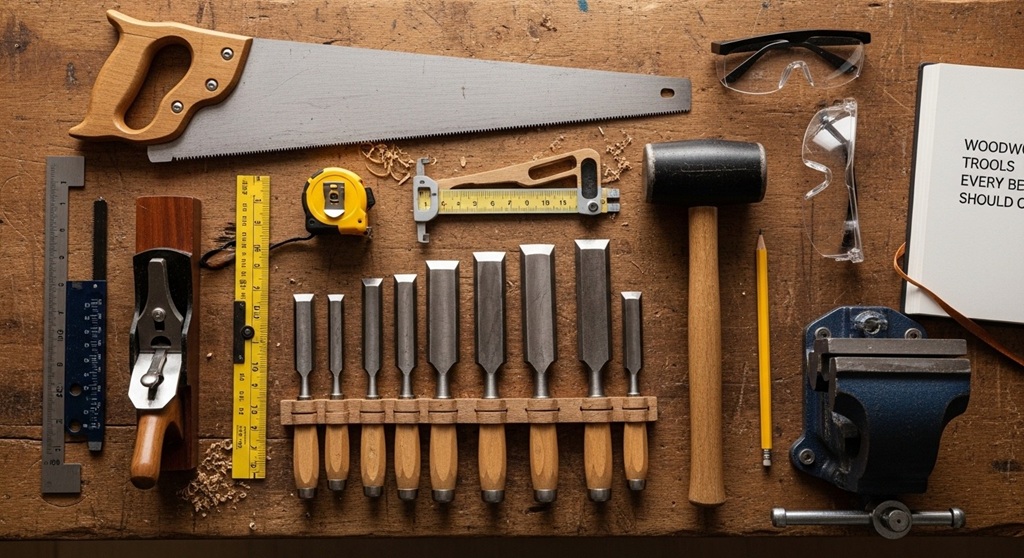
Essential woodworking tools are the basic hand and power tools that allow beginners to measure, cut, shape, join, and finish wood safely and accurately. A practical starter tool kit includes a measuring tape, combination square, hand saw or circular saw, chisels, hammer, cordless drill, clamps, sander, and safety gear.
Many beginners quit woodworking not because they lack passion, but because they start without the right tools. Crooked cuts. Loose joints. Wasted materials. Frustration builds quickly.
According to industry data from the U.S. Bureau of Labor Statistics, over 400,000 people work in carpentry-related professions in the United States alone. Most began with basic tools in small workshops or garages. The difference between hobbyists who progress and those who quit is often tool selection and skill development.
This guide explains exactly what you need, why you need it, and how to build a reliable starter tool kit without overspending. Each section answers a common beginner question in a clear, direct format so you can take action immediately.
Why Is a Starter Tool Kit Important for Beginner Woodworkers?
A starter tool kit gives beginners the ability to complete real projects safely and accurately without buying unnecessary equipment.
Many new woodworkers make one of two mistakes:
- They buy too many advanced tools too early.
- They buy cheap tools that compromise accuracy.
Both lead to poor results. Precision matters in woodworking. A gap of 1–2 millimeters can weaken joints. Poor measurements compound over time.
A structured starter tool kit focuses on five core capabilities:
- Measuring and marking
- Cutting
- Drilling and fastening
- Shaping and smoothing
- Clamping and assembly
When these foundations are covered, you can build shelves, small tables, cabinets, frames, and DIY home projects with confidence.
What Measuring and Marking Tools Should Every Beginner Own?
Every beginner needs a measuring tape, combination square, marking pencil, and marking gauge.
1. Measuring Tape
A 16–25 ft tape measure is ideal for most home projects. Look for clear markings and a solid locking mechanism.
2. Combination Square
This tool ensures 90-degree and 45-degree angles. Accurate angles prevent misaligned joints.
3. Marking Tools
- Carpenter’s pencil
- Marking knife
- Marking gauge
Precise marking reduces cutting errors. In woodworking, you “measure twice, cut once.” This principle reduces waste and saves money over time.
Which Cutting Tools Are Essential in a Beginner Starter Tool Kit?
A beginner should own at least one reliable saw, preferably a circular saw or quality hand saw, along with a basic set of chisels.
1. Hand Saw
Affordable. Simple. No electricity required. Ideal for learning control.
2. Circular Saw
More versatile for larger boards and sheet goods. It speeds up project time significantly.
If you are choosing a saw for your projects, you can explore this detailed guide on selecting the best saw for cutting wood to match your project needs.
3. Wood Chisels
A basic set (¼”, ½”, ¾”, 1″) allows beginners to:
- Clean joints
- Trim excess material
- Create mortises
- Refine edges
Sharp chisels matter. Dull blades increase accident risk and reduce accuracy.
What Drilling and Fastening Tools Do Beginners Need?
A cordless drill with drill bits and driver bits is essential for assembling most woodworking projects.
1. Cordless Drill
A 12V or 18V drill handles most beginner tasks. It drills pilot holes and drives screws efficiently.
2. Drill Bit Set
- Twist bits for general drilling
- Spade bits for larger holes
- Countersink bits for flush screws
3. Screwdriver Set
Even with a drill, manual screwdrivers provide better control for delicate work.
Case studies from DIY workshop programs show that beginners who pre-drill pilot holes reduce wood splitting by up to 60%. That small step dramatically improves project durability.
Why Are Clamps Considered Essential Woodworking Tools?
Clamps hold materials securely in place during cutting and glue-ups, improving accuracy and safety.
Without clamps, wood shifts. Even slight movement leads to uneven joints.
Recommended Clamps for Beginners:
- Bar clamps (24”)
- Quick-grip clamps
- C-clamps
A good rule: You can never have too many clamps.
During glue-ups, proper clamping pressure ensures strong joints. Wood glue, when clamped correctly, can be stronger than the wood fibers themselves.
What Tools Help With Shaping and Smoothing Wood?
A block plane and power sander are the most efficient shaping and smoothing tools for beginners.
1. Block Plane
Used for trimming edges and adjusting joints. It provides fine control.
2. Random Orbital Sander
Speeds up sanding significantly. Reduces swirl marks when used properly.
3. Sandpaper Assortment
- 80 grit – heavy material removal
- 120 grit – smoothing
- 220 grit – finishing
Surface preparation determines finishing quality. According to finishing professionals, over 70% of finish issues stem from poor sanding preparation.
What Safety Equipment Should Be Included in a Starter Tool Kit?
Safety glasses, hearing protection, dust masks, and work gloves are mandatory for safe woodworking.
Woodworking generates fine dust particles. Long-term exposure can cause respiratory issues.
- ANSI-rated safety glasses
- Ear protection for power tools
- N95 dust masks
- Work gloves for handling rough lumber
According to safety data from OSHA, improper eye protection is one of the leading causes of workshop injuries. Investing in safety is not optional.
How Much Should a Beginner Spend on Essential Woodworking Tools?
A complete beginner starter tool kit can cost between $300 and $800 depending on quality and brand selection.
| Tool Category | Estimated Budget Range |
|---|---|
| Measuring & Marking | $40–$80 |
| Cutting Tools | $100–$300 |
| Drill & Bits | $100–$250 |
| Clamps | $50–$150 |
| Safety Gear | $30–$100 |
Start mid-range. Avoid extremely cheap tools. Precision and durability matter more than brand hype.
How Can Beginners Expand Their Woodworking Tool Collection Over Time?
Beginners should expand tools based on project needs, not impulse purchases.
After mastering basics, consider:
- Table saw
- Router
- Miter saw
- Workbench with vise
Add tools only when projects demand them. Skill growth should guide purchases.
Conclusion: Are You Ready to Build Your Starter Tool Kit?
Woodworking rewards patience and precision. The right tools remove frustration and increase confidence.
You do not need a professional workshop to begin. You need the essentials. Measuring tools. A reliable saw. A drill. Clamps. Sanding equipment. Safety gear.
Build your starter tool kit step by step. Focus on quality. Practice consistently. Start small projects and improve with each build.
If you are selecting cutting tools, make sure you review expert recommendations before buying. Choosing the correct saw impacts every project you complete.
Take action today. Build your first project. Invest in the right tools. Progress starts with the first cut.
Frequently Asked Questions (FAQs)
1. What is the most important tool for beginner woodworking?
A reliable saw and measuring tools are the most important. Accurate measurement and clean cuts form the foundation of every project.
2. Can I start woodworking with only hand tools?
Yes. Many beginners start with hand saws, chisels, and planes. Power tools increase efficiency but are not mandatory at first.
3. How do I maintain woodworking tools?
Keep blades sharp, store tools in dry areas, clean dust after use, and lubricate moving parts regularly.
4. Are expensive tools better for beginners?
Not always. Mid-range tools often offer the best balance of cost and durability.
5. What wood is best for beginners?
Pine and poplar are affordable, easy to cut, and widely available.
6. How long does it take to learn woodworking basics?
With consistent practice, most beginners gain basic confidence within 3–6 months.
Related Topic: How to Select Magnetic Bike Rollers for Resistance Training
Read Next: How Label Makers Help You Organize Your Home Efficiently