
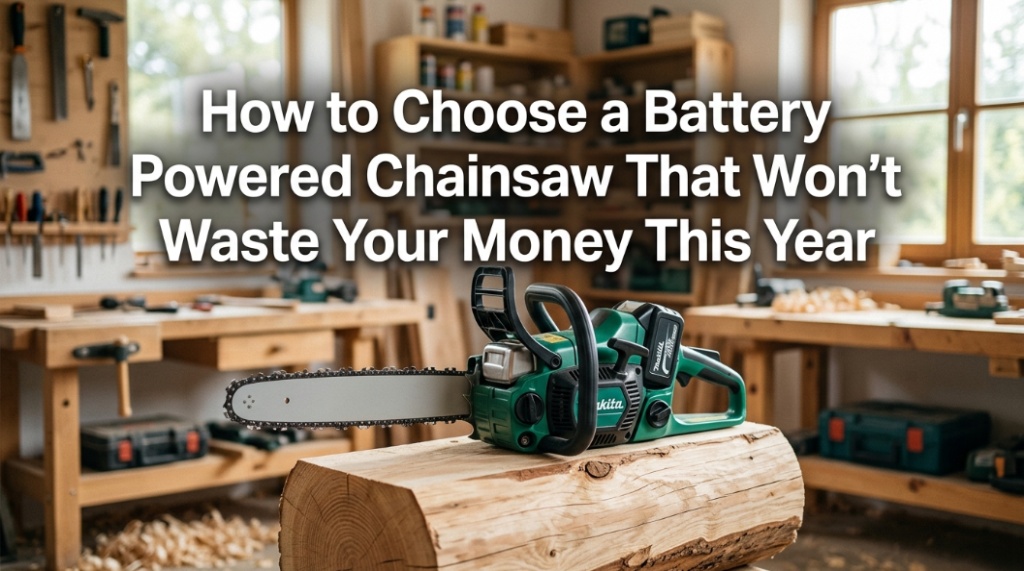
The fastest way to avoid wasting money on a battery powered chainsaw is surprisingly simple: ignore the marketing claims on the box and focus on battery voltage, chain speed, bar length, and battery ecosystem compatibility. Many buyers pay extra for features they never use, while overlooking the specifications that actually determine cutting performance, runtime, and long-term value.
A battery powered chainsaw, often called a cordless chainsaw, is an electric chainsaw powered by rechargeable lithium-ion batteries instead of gasoline. It delivers cutting power without fuel mixing, pull starts, excessive maintenance, or high noise levels.
Choosing the wrong chainsaw can become expensive quickly. A low-quality model may struggle with hardwood, drain batteries too fast, require costly replacements, or force upgrades within a year. With battery-powered tools becoming more advanced every season, selecting the right model requires understanding performance metrics rather than relying on brand marketing alone.
This guide explains exactly how to choose a battery powered chainsaw that provides real value, lasts for years, and matches your cutting needs without overspending.
What Should You Look for First When Buying a Battery Powered Chainsaw?
The first thing to evaluate is whether the chainsaw matches the type of cutting you actually perform.
Many homeowners only cut fallen branches, trim trees, or process small firewood. Buying a professional-grade saw for occasional yard work often wastes hundreds of dollars. Before comparing brands, determine the average branch diameter, wood type, and frequency of use.
Battery voltage, bar length, chain speed, weight, and runtime should align with your specific projects. Understanding these fundamentals helps prevent costly purchasing mistakes and ensures you invest in a tool that fits your needs.
For homeowners interested in maximizing battery performance across outdoor equipment, these battery monitoring and optimization techniques highlight useful practices that can also help extend rechargeable battery lifespan through better charging habits.
- Occasional pruning: 20V–40V systems
- Regular yard maintenance: 40V–60V systems
- Heavy firewood cutting: 60V–80V systems
- Professional land management: High-output battery platforms
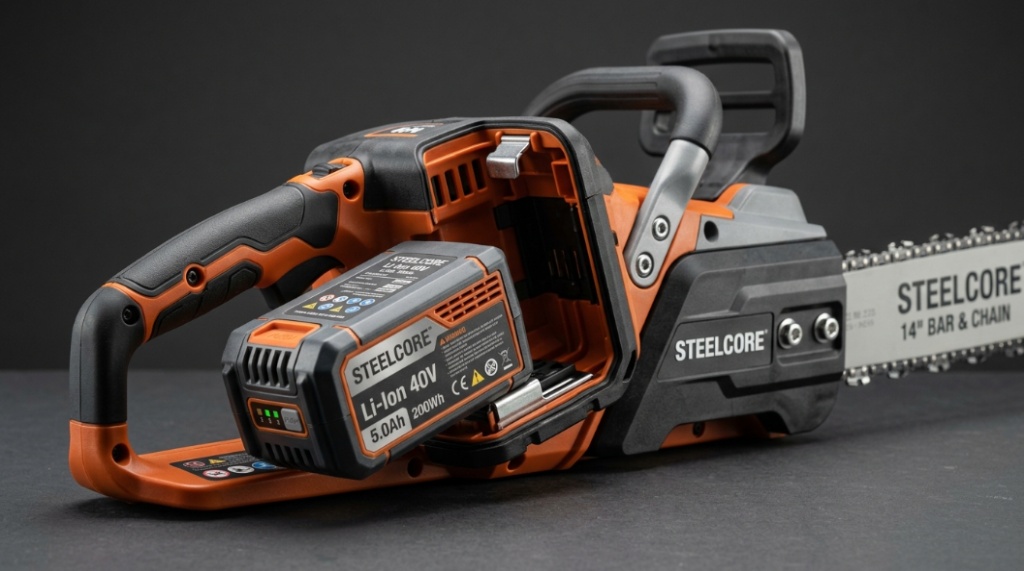
How Much Power Does a Cordless Chainsaw Need?
Most homeowners need a 40V to 60V cordless chainsaw for reliable performance and long-term value.
Voltage directly affects motor output and cutting capability. While voltage alone does not determine power, it provides a useful benchmark when comparing battery platforms.
| Voltage Range | Best For | Typical Performance |
|---|---|---|
| 20V–24V | Light pruning | Small branches and cleanup |
| 40V | General yard work | Medium branches and trimming |
| 56V–60V | Firewood cutting | Strong cutting performance |
| 80V+ | Heavy-duty applications | Near gas-powered capability |
Modern brushless motors significantly improve efficiency. A quality brushless motor often delivers better performance than an older brushed motor with similar voltage ratings.
Is higher voltage always better?
No. Higher voltage increases capability but also adds cost and weight. The ideal choice balances power, runtime, portability, and budget.
What Is the Best Bar Length for Most Homeowners?
A 14-inch to 16-inch guide bar is ideal for most residential users.
Bar length determines the maximum diameter of wood you can cut efficiently. Larger bars appear attractive, but they increase weight and battery consumption.
Most yard maintenance tasks rarely require more than a 16-inch bar. Branch trimming, storm cleanup, and firewood preparation can typically be completed comfortably within this range.
- 10–12 inches: Light pruning
- 14–16 inches: General homeowner use
- 18–20 inches: Large trees and firewood
- 20+ inches: Professional forestry work
A moderate bar length often delivers faster cutting because the motor maintains optimal chain speed with less strain.
Why Does Battery Capacity Matter More Than Many Buyers Realize?
Battery capacity determines runtime and overall productivity during cutting sessions.
Battery capacity is measured in amp-hours (Ah). Higher Ah ratings store more energy, allowing longer operation before recharging.
Understanding battery management is important for all rechargeable devices. Similar to how organized systems improve efficiency around the house, smart storage practices discussed in this guide on creating better home organization systems can also help users keep batteries, chargers, and accessories properly maintained and easy to locate.
| Battery Size | Runtime Category | Typical Use |
|---|---|---|
| 2.0Ah | Short | Quick pruning jobs |
| 4.0Ah | Moderate | General yard work |
| 5.0Ah–6.0Ah | Long | Firewood preparation |
| 7.5Ah+ | Extended | Heavy-duty cutting |
When evaluating total ownership cost, include the battery price. In many systems, replacement batteries account for a significant portion of future expenses.
Should you buy extra batteries?
Yes. Purchasing a second battery often increases productivity more than upgrading to a larger chainsaw model.
How Important Is Chain Speed in an Electric Chainsaw?
Chain speed is one of the strongest indicators of cutting performance.
Measured in feet per second (FPS) or meters per second (m/s), chain speed determines how quickly cutters move through wood fibers.
Higher chain speeds generally result in:
- Faster cuts
- Cleaner finishes
- Reduced motor strain
- Improved efficiency
- Better productivity
For most homeowners, chain speeds above 15 m/s provide excellent cutting performance. Premium models often exceed 20 m/s and approach gas-powered saw capabilities.
Are Brushless Motors Worth Paying Extra For?
Yes. Brushless motors typically justify their higher price through improved efficiency, durability, and performance.
Traditional brushed motors use physical contact components that gradually wear down. Brushless technology eliminates this friction and allows more precise electronic control.
Benefits include:
- Longer motor lifespan
- Reduced maintenance
- Higher efficiency
- Better battery utilization
- Increased torque output
- Lower operating temperatures
For users planning to keep a chainsaw for several years, brushless technology usually provides better long-term value.
Which Safety Features Should Every Cordless Chainsaw Have?
A quality chainsaw should include multiple safety systems that activate automatically during operation.
Chainsaws remain powerful cutting tools regardless of power source. Safety features reduce injury risk and improve user confidence.
Essential safety features include:
- Chain brake
- Low kickback chain
- Hand guard protection
- Trigger lockout
- Automatic chain lubrication
- Anti-vibration design
Kickback remains one of the most common chainsaw hazards. Modern chain brake systems can stop chain movement within fractions of a second when kickback occurs.
Do battery-powered chainsaws kick back?
Yes. Although often easier to control than gas models, cordless chainsaws can still experience kickback if used improperly.
What Makes One Battery Ecosystem Better Than Another?
The battery ecosystem often determines whether your purchase becomes a smart investment or an expensive mistake.
Many manufacturers design interchangeable battery platforms across multiple outdoor power tools. A battery purchased for a chainsaw may also power:
- Leaf blowers
- String trimmers
- Hedge trimmers
- Lawn mowers
- Pole saws
- Pressure washers
Buying into a well-developed ecosystem reduces future costs because additional tools can use existing batteries and chargers.
Before purchasing, review the manufacturer’s complete product lineup and future expansion opportunities.
How Do Battery Powered Chainsaws Compare to Gas Chainsaws?
Battery chainsaws now outperform gas models in several homeowner-focused categories.
| Feature | Battery Chainsaw | Gas Chainsaw |
|---|---|---|
| Startup | Instant | Pull start required |
| Maintenance | Low | High |
| Noise | Lower | Higher |
| Emissions | None during operation | Produces exhaust |
| Weight | Generally lighter | Often heavier |
| Runtime | Battery dependent | Refuel anytime |
Recent advances in lithium-ion technology have significantly narrowed the performance gap. Many premium cordless chainsaws now rival mid-range gas-powered alternatives.
What Mistakes Cause Buyers to Waste Money on an Electric Chainsaw?
The most expensive mistake is buying based solely on advertised power or price.
Common purchasing mistakes include:
- Ignoring battery replacement costs
- Buying unnecessary bar length
- Overlooking chain speed specifications
- Selecting brushed motors over brushless alternatives
- Purchasing outside a useful battery ecosystem
- Choosing the cheapest available model
- Ignoring warranty coverage
Independent consumer testing consistently shows that mid-tier models often deliver the best balance of performance and value.
Researching real-world cutting tests is generally more useful than comparing marketing claims.
How Can You Identify the Best Value Battery Powered Chainsaw?
The best value model balances performance, battery compatibility, reliability, and total ownership cost.
Rather than focusing on the lowest purchase price, evaluate long-term value.
A useful approach is reviewing practical buying guides such as this comprehensive resource on affordable battery powered chainsaw options and buying considerations, which highlights important factors affecting overall value.
Look for:
- Brushless motor technology
- 40V–60V battery platform
- Reliable chain brake system
- Strong warranty coverage
- Widely available replacement parts
- Interchangeable battery ecosystem
- Positive long-term user reviews
When all factors are considered together, spending slightly more upfront often reduces ownership costs over several years.
Conclusion: Which Battery Powered Chainsaw Offers the Best Long-Term Value?
The best battery powered chainsaw is not necessarily the most powerful or expensive model. It is the one that matches your cutting requirements while providing dependable runtime, efficient performance, and compatibility with a broader battery platform.
For most homeowners, a brushless 40V to 60V cordless chainsaw with a 14-inch or 16-inch bar offers the strongest combination of power, runtime, maneuverability, and affordability. Paying attention to chain speed, battery capacity, safety systems, and ecosystem compatibility prevents costly mistakes and improves long-term satisfaction.
If you’re comparing models before purchasing, reviewing detailed buying resources and product breakdowns such as this guide to cost-effective battery chainsaw selections can help narrow down the best option for your needs.
Invest wisely, compare specifications carefully, and prioritize long-term value over marketing claims. A well-chosen cordless chainsaw can deliver years of reliable performance while saving time, maintenance costs, and unnecessary frustration.
Frequently Asked Questions About Battery Powered Chainsaws
How long does a battery powered chainsaw battery last?
Most modern lithium-ion batteries provide 30 to 90 minutes of active cutting depending on battery size, wood density, chain sharpness, and motor efficiency. Higher-capacity batteries typically deliver longer runtime.
Can a cordless chainsaw cut hardwood?
Yes. Quality cordless chainsaws equipped with brushless motors and high-capacity batteries can efficiently cut hardwood species such as oak, maple, ash, and hickory when paired with a sharp chain.
Are battery powered chainsaws good for firewood?
Yes. Many 40V, 56V, 60V, and 80V models are designed specifically for firewood processing. Performance depends on battery capacity, chain speed, and bar length.
How often should you sharpen a chainsaw chain?
Sharpen the chain whenever cutting speed decreases, fine sawdust appears instead of wood chips, or extra pressure becomes necessary. Frequent users may sharpen after several hours of cutting.
Do electric chainsaws require chain oil?
Yes. Most electric chainsaws use automatic oiling systems that lubricate the chain and guide bar during operation. Running without chain oil can cause premature wear and damage.
Are brushless chainsaws better than brushed models?
In most cases, yes. Brushless chainsaws deliver improved efficiency, longer lifespan, reduced maintenance, better battery performance, and stronger torque output.
What size battery is best for a cordless chainsaw?
For most homeowners, a 4.0Ah to 6.0Ah battery provides an excellent balance between runtime and weight. Heavy-duty cutting may benefit from larger battery capacities.
Image ALT Texts
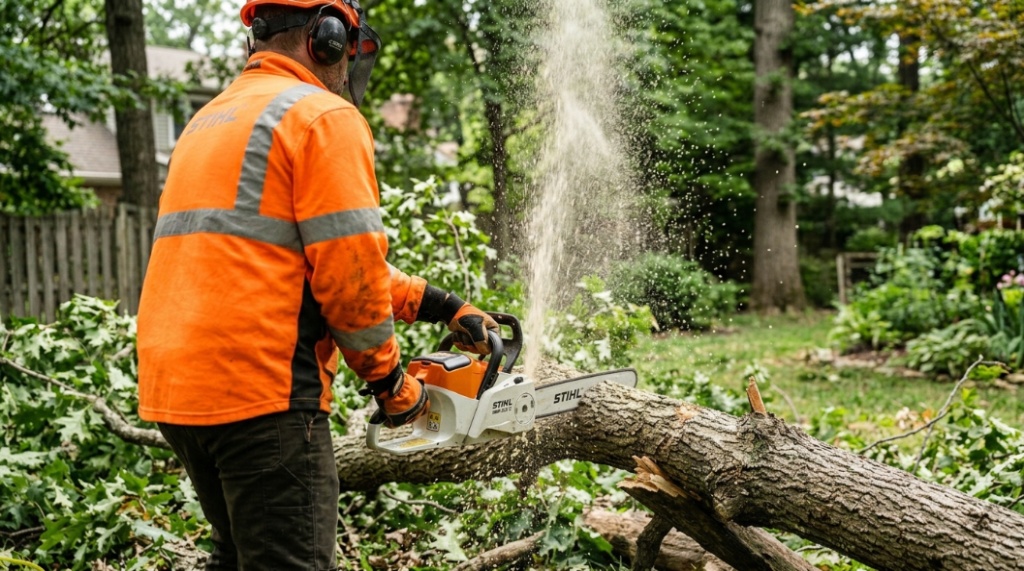
- Homeowner cutting tree branch with cordless chainsaw
- Battery powered chainsaw beside rechargeable battery pack
- Electric chainsaw cutting stacked firewood logs