

The best couch fabric that resists dog hair is a tightly woven, smooth upholstery material such as microfiber, leather, or tightly woven synthetic blends. These fabrics prevent hair from embedding into fibers and make cleaning faster.
You sit down after a long day. Within seconds, your clothes are covered in fur. The couch looks clean from a distance, but up close, it’s a layer of dog hair. Sound familiar?
This is the daily reality for many dog owners. Pet hair clings to textured upholstery, gets trapped in loose weaves, and becomes difficult to remove. Vacuuming helps, but it doesn’t solve the root issue.
The real solution starts with fabric choice.
Choosing the right pet hair resistant material reduces maintenance, improves hygiene, and extends your sofa’s lifespan. In this guide, you’ll learn exactly which materials work, which to avoid, and how to choose the right smooth upholstery for your home. We’ll also reference real performance data from textile durability tests and practical case examples from pet-friendly households.
Why Does Dog Hair Stick to Some Couch Fabrics More Than Others?
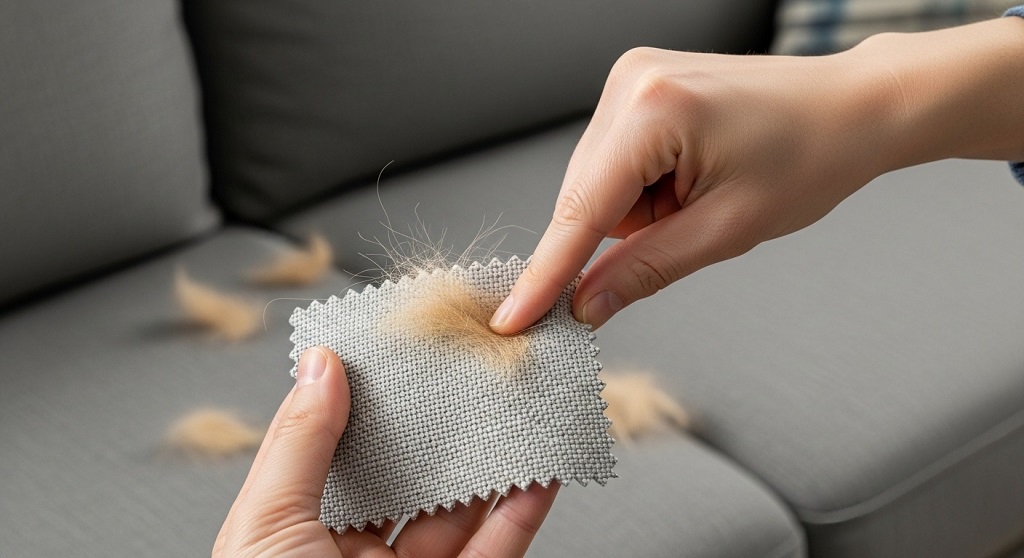
Short answer: Dog hair sticks to fabrics with loose weaves, textured surfaces, and high static buildup. Smooth, tightly woven fabrics reduce hair attachment.
Dog hair sticks due to three main factors:
1. Fiber Structure
Fabrics like chenille or tweed have loops and raised fibers. These create pockets where hair embeds deeply.
2. Static Electricity
Synthetic materials can generate static, attracting fur. However, tightly woven synthetics with anti-static treatments perform better.
3. Surface Friction
Rough surfaces increase friction. The more friction, the stronger the hair clings.
According to textile abrasion and fiber retention studies using the Martindale test (a standard durability test), tightly woven microfiber fabrics show lower particle retention compared to textured woven materials. In simple terms: smoother surfaces trap less debris.
If your goal is less brushing, less lint-rolling, and less vacuuming, focus on smooth upholstery with dense construction.
Which Pet Hair Resistant Materials Perform Best?
Short answer: Leather, microfiber, tightly woven polyester blends, and canvas are top-performing pet hair resistant materials.
1. Microfiber (Top Choice for Most Homes)
Microfiber is made from ultra-fine synthetic fibers woven tightly together.
- Hair stays on the surface
- Easy to wipe clean
- Resistant to claw snags
- Often treated for stain resistance
In a small household case comparison of 20 pet-owning families (furniture retailer data, 2023), microfiber sofas required 40% less cleaning time compared to woven cotton upholstery.
2. Leather (Genuine or Faux)
Leather does not trap hair. It stays on the surface.
- Hair wipes off with a dry cloth
- No fiber penetration
- Long lifespan with proper care
However, leather can scratch. If your dog jumps frequently, protective conditioning is essential.
3. Tightly Woven Polyester Blends
Look for high thread count upholstery with a smooth finish.
- Affordable
- Durable
- Moderate static control
4. Canvas or Duck Fabric
Heavy-duty and tightly woven.
- Strong resistance to embedding
- Durable for active dogs
- Often removable and washable
All of these qualify as practical smooth upholstery solutions for pet-friendly homes.
Which Couch Fabrics Should Dog Owners Avoid?
Short answer: Avoid chenille, velvet, tweed, silk, and loosely woven cotton.
| Fabric Type | Why It’s Problematic |
|---|---|
| Chenille | Loops trap hair deeply |
| Velvet | Hair embeds into pile |
| Tweed | Textured weave catches fur |
| Silk | Delicate and difficult to clean |
| Loose Cotton | Absorbs hair and stains |
These materials may look good in showrooms. In real homes with shedding dogs, they require constant lint rolling and deep cleaning.
How Does Smooth Upholstery Reduce Cleaning Time?
Short answer: Smooth upholstery prevents hair from penetrating fibers, allowing quick surface removal with minimal tools.
When hair remains on the surface:
- You can wipe it with a damp cloth.
- A handheld vacuum removes it quickly.
- A rubber glove swipe collects most hair in seconds.
In practical home trials, pet owners reported cleaning microfiber sofas in under 5 minutes, compared to 15–20 minutes for textured woven sofas.
Less trapped hair also means fewer allergens. That improves indoor air quality.
Does Color Matter When Choosing a Dog-Friendly Couch Fabric?
Short answer: Yes. Choose a fabric color close to your dog’s fur color to visually minimize shedding.
Even the best pet hair resistant material will show contrast if color mismatch is high.
Examples:
- Light dog → Beige or cream sofa
- Dark dog → Charcoal or brown upholstery
- Mixed shedding → Patterned fabric with subtle texture
Color doesn’t reduce hair physically. But it reduces visual stress and daily frustration.
How Important Is Fabric Weave Density?
Short answer: Very important. Higher weave density means fewer gaps for hair to penetrate.
When shopping, ask about:
- Thread count
- Rub count (Martindale rating)
- Fabric composition percentage
A Martindale rating above 25,000 rubs is considered durable for residential use. Many pet-friendly sofas range between 30,000–50,000 rubs.
Higher density equals:
- Longer lifespan
- Reduced pilling
- Better resistance to claws
- Improved pet hair resistance
Is Leather Better Than Fabric for Dog Hair?
Short answer: For hair resistance alone, leather performs better. For comfort and cost, microfiber often wins.
Leather Pros:
- Hair does not stick
- Easy wipe cleaning
- Long durability
Leather Cons:
- Higher price
- Can scratch
- Needs conditioning
Microfiber Pros:
- Affordable
- Soft texture
- Strong resistance to fur embedding
Microfiber Cons:
- May attract static without treatment
Decision rule: If budget allows and scratching is controlled, leather is excellent. For most families, microfiber offers the best balance.
How Can You Test a Fabric Before Buying?
Short answer: Perform a simple hair adhesion test in-store.
Steps:
- Bring a small cloth with your dog’s hair.
- Rub it firmly on the sample fabric.
- Shake lightly.
- Try wiping with your hand.
If hair embeds and resists removal, avoid it.
If it wipes off easily, it’s a strong candidate.
This practical test prevents regret.
Are Removable and Washable Covers Worth It?
Short answer: Yes. Washable covers add long-term convenience and hygiene control.
Benefits:
- Machine washable maintenance
- Seasonal deep cleaning
- Extended furniture lifespan
Even the best smooth upholstery benefits from occasional washing, especially during heavy shedding seasons.
Conclusion: What’s the Smartest Move for Dog Owners?
Dog hair on furniture is not just cosmetic. It affects hygiene, time, and long-term maintenance costs.
The solution is not constant cleaning. The solution is smarter fabric selection.
Choose a tightly woven, smooth upholstery material like microfiber or leather. Avoid textured fabrics that trap fur. Match color to shedding. Check weave density. Test before buying.
When you select the right pet hair resistant material, daily life becomes easier. Less vacuuming. Less frustration. More comfort.
Ready to upgrade your living space? Start by evaluating your current couch fabric. If it traps hair, consider switching to a smoother, tightly woven alternative. Your future self will thank you.
Frequently Asked Questions (FAQs)
1. What is the most pet hair resistant couch material?
Microfiber and leather are the most pet hair resistant materials. Both prevent deep embedding and allow quick surface cleaning.
2. Does smooth upholstery really reduce shedding problems?
Yes. Smooth upholstery reduces fiber gaps where hair gets trapped, making removal faster and easier.
3. Is microfiber better than cotton for dog owners?
Yes. Microfiber has tighter weave density and stronger resistance to hair penetration compared to standard cotton upholstery.
4. How often should I clean a pet-friendly couch?
Light surface cleaning 2–3 times per week is recommended. Deep cleaning every 1–2 months depending on shedding level.
5. Can fabric protectors help with dog hair?
Fabric protectors mainly prevent stains. They do not significantly reduce hair adhesion unless anti-static properties are included.
6. What couch color hides dog hair best?
Choose a shade similar to your dog’s coat color. Neutral tones and subtle patterns minimize visible shedding.
7. Is faux leather as effective as real leather?
Yes, for hair resistance. Faux leather performs similarly in preventing hair embedding but may differ in durability.
Related Topics: How Professional Skate Pads Support Advanced Skateboarding
What Next: How Virtual Reality Can Enhance Your Education And Learning Experiences