
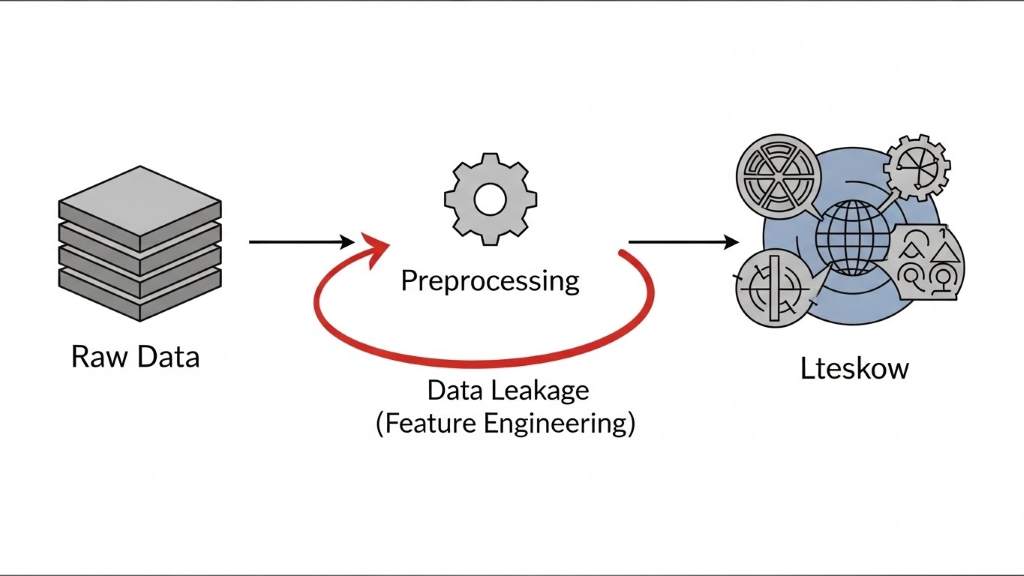
Imagine you build a machine learning model that scores perfectly during tests. You deploy it, and it flops in the real world. What went wrong? Data leakage often hides the issue. This sneaky problem tricks models into false success. In this guide, you learn how to spot it before training starts. You gain practical steps to keep your projects clean and reliable.
Data leakage happens when models access information they should not have. It leads to overstated performance. Experts in machine learning stress early detection saves time and resources. You avoid costly mistakes. This article covers definitions, types, detection methods, and prevention. You get actionable advice from start to finish.
Understanding Data Leakage in Machine Learning
You start with basics. Grasp what data leakage means. See why it occurs. Know its effects on your work.
What Is Data Leakage?
Data leakage refers to unintended information flow into your model. Your training data includes details from the test set or future events. Models learn patterns they would not see in production.
According to industry experts, leakage mimics cheating on a test. You know answers ahead. Results look great but fail new challenges. Common in predictive modeling tasks like classification or regression.
Think of a credit scoring system. If future payment data slips into training, the model predicts defaults too easily. Real use exposes the flaw.
Common Causes of Data Leakage
Causes vary. Improper data splitting ranks high. You mix train and test sets. Features derived from the entire dataset cause issues too.
Professionals point to time-based data. In time series, future values leak into past training. Duplicate records across splits add risk.
Human error plays a role. You preprocess data before splitting. Scaling or imputing uses global stats. This contaminates isolation.
Impacts of Data Leakage on Model Performance
Leakage boosts metrics falsely. You see high accuracy in validation. Deployment brings poor results. Trust erodes.
Based on widely accepted industry standards, leakage wastes effort. You retrain models. Businesses lose money on bad decisions.
In healthcare, leaked patient outcomes skew predictions. Doctors rely on faulty advice. Early detection protects integrity.
Why Detect Data Leakage Before Model Training
Spot issues early. Training on leaked data hides problems until late. You invest hours in flawed work.
Experts recommend pre-training checks. You save compute resources. Models train faster on clean data.
Detection builds robust systems. You ensure fair evaluations. Stakeholders gain confidence in outputs.
Consider costs. Retraining cycles delay projects. Prevention streamlines workflows. You deliver value quicker.
Common Types of Data Leakage
Know the forms. Each type needs specific checks. Address them to safeguard your pipeline.
Target Leakage
Target leakage occurs when features include target-related info. You predict sales but use future returns data.
According to professionals, this inflates scores. Models learn direct links instead of patterns.
Example: Fraud detection. If you include transaction status post-investigation, leakage happens.
Train-Test Contamination
This type mixes train and test data. You apply transformations across both.
Industry experts warn against global feature engineering. Split first, then process.
Duplicates amplify the issue. One record in both sets transfers knowledge.
Temporal Leakage
In sequential data, future info leaks back. You train on events after the prediction point.
As recommended by professionals, use time-based splits. Roll forward in validation.
Stock prediction suffers here. Using tomorrow’s prices today cheats the model.
Group Leakage
Data groups like users or items overlap splits. You predict user behavior but split randomly.
Experts suggest group-aware splitting. Keep all group data in one set.
Medical records by patient illustrate this. Mixing visits leaks outcomes.
Strategies to Detect Data Leakage
You now dive into methods. Use these before training. Combine for best results.
Perform Exploratory Data Analysis (EDA)
Start with EDA. Visualize and summarize data.
Plot distributions. Compare train and test sets. Look for identical patterns.
Use histograms. Check feature overlaps. Unusual similarities signal leakage.
Professionals advise correlation matrices. High target correlations in features hint at issues.
Conduct Statistical Tests
Apply tests for differences.
Run Kolmogorov-Smirnov test. Compare distributions between splits.
T-tests check means. Significant differences confirm clean splits.
According to industry experts, p-values below 0.05 suggest no leakage if splits differ.
For categorical data, use chi-square. Ensure independence.
Implement Cross-Validation Techniques
Cross-validation exposes leaks.
Use k-fold CV. Monitor performance variance.
High consistency across folds may indicate leakage.
As per widely accepted standards, stratified folds preserve class balance.
Time-series CV rolls forward. Prevents future leaks.
Inspect Features Thoroughly
Examine each feature.
Trace origins. Ensure no target-derived info.
Check timestamps. Verify chronological order.
Experts recommend dependency graphs. Map feature creation.
Remove suspicious ones. Retrain to test impact.
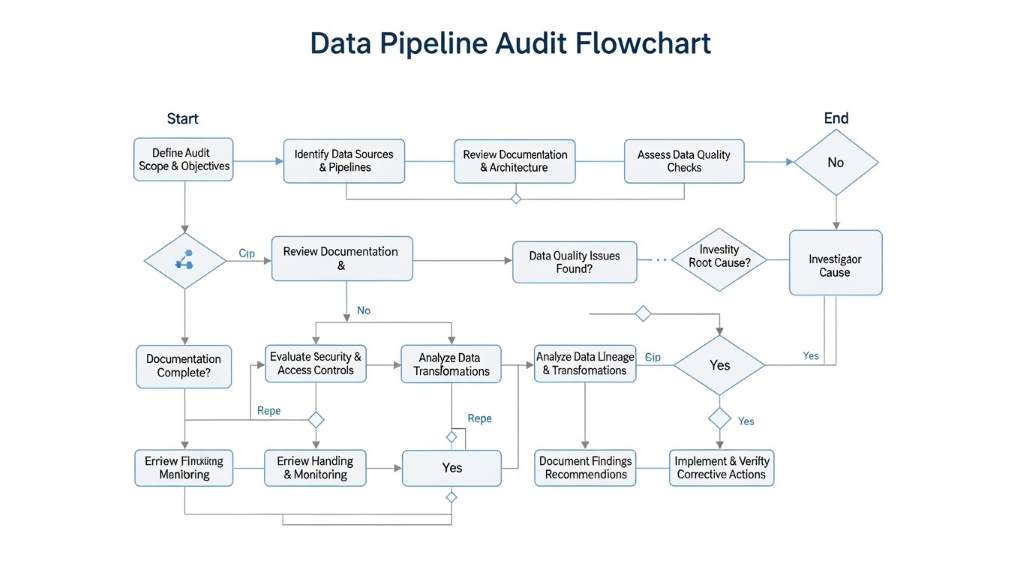
Audit Your Data Pipeline
Review the entire process.
Document steps. From collection to splitting.
Simulate runs. Log transformations.
Professionals suggest version control. Track changes.
Automated checks flag anomalies.
Practical Steps to Detect and Prevent Data Leakage
Follow these steps. Make them routine.
- Collect data carefully. Label sources.
- Split data first. Use random seeds for reproducibility.
- Preprocess separately. Apply scalers per set.
- Validate splits. Run statistical tests.
- Engineer features post-split. Avoid global stats.
- Use holdout sets. Keep one untouched.
- Monitor metrics. Question perfect scores.
- Document everything. Reference for audits.
Based on manufacturer guidelines for data tools, automate where possible.
Incorporate checks in code. Raise alerts on issues.
Real-World Examples of Data Leakage Detection
See applications.
In finance, a team built a loan approval model. EDA showed identical distributions in train-test. They found improper splitting. Fixed it, scores dropped but became realistic.
Healthcare case: Predicting readmissions. Temporal check revealed future lab results in training. Rolled splits fixed it.
E-commerce: Recommendation system. Group leakage from user IDs. GroupKFold resolved overlaps.
According to industry experts, these fixes improved deployment success.
Best Practices for Maintaining Data Integrity
Adopt habits.
Train teams on leakage risks. Share knowledge.
Use pipelines. Scikit-like structures enforce order.
Version datasets. Track versions.
Professionals recommend peer reviews. Catch errors early.
Test on new data. Simulate production.
Tools and Techniques for Detection
Leverage general tools.
Python libraries help. Pandas for EDA, SciPy for tests.
Build custom functions. Automate checks.
As recommended by professionals, integrate into workflows.
Visual tools like Seaborn aid plots.
Keep it simple. Focus on logic over complexity.
Challenges in Detecting Data Leakage
Face hurdles.
Large datasets slow tests.
Complex pipelines hide leaks.
Domain knowledge gaps miss subtle issues.
Experts suggest incremental checks. Break down processes.
Collaborate with domain pros. Gain insights.
Overcoming Detection Challenges
Tackle them head-on.
Sample data for quick tests.
Modularize pipelines. Test modules.
Build expertise. Study cases.
According to widely accepted standards, continuous learning helps.
The Role of Documentation in Prevention
Document thoroughly.
Log data sources. Note transformations.
Create flowcharts. Visualize pipelines.
Professionals stress this. Eases audits.
Share docs. Team alignment prevents slips.
Integrating Detection into Your Workflow
Make it seamless.
Add checks in CI/CD.
Script alerts.
Based on industry standards, this ensures consistency.
Review periodically. Update methods.
Future Trends in Data Leakage Detection
Look ahead.
AI-assisted detection rises. Tools scan automatically.
Federated learning reduces risks.
Experts predict tighter standards.
Stay informed. Adapt practices.
Conclusion
You now know how to detect data leakage before model training. Start with understanding types and causes. Use EDA, tests, and audits. Follow practical steps for clean data. Prevent issues to build reliable models.
Take action today. Review your current pipeline. Apply one detection method. Your models improve. Share this knowledge with your team. Stronger projects await.
Ready to safeguard your machine learning projects? Implement these strategies now and boost your model’s real-world performance.
FAQ
What is the difference between data leakage and overfitting?
Data leakage gives models unauthorized info. Overfitting learns noise in training data. Leakage causes false high scores across sets. Overfitting shows high train but low test scores.
How does data leakage affect model deployment?
It leads to poor real-world performance. Models fail on new data. Businesses face losses. Trust in AI drops.
Can data leakage occur in unsupervised learning?
Yes. In clustering, leaked labels influence groups. Anomaly detection suffers from contaminated baselines.
What statistical tests best detect leakage?
Kolmogorov-Smirnov for distributions. T-tests for means. Chi-square for categories. Use based on data type.
How often should you check for data leakage?
Check before every training run. Audit pipelines quarterly. Review after data updates.
Is data leakage preventable in all cases?
Most cases, yes. With proper splits and processes. Some complex scenarios need extra vigilance.
What role does domain knowledge play in detection?
It helps spot subtle leaks. Experts identify illogical features. Combines with technical checks.
How to handle leakage in time-series data?
Use forward-chaining cross-validation. Split by time. Avoid future features.
Can automated tools fully detect leakage?
They help but not fully. Human oversight catches nuances. Combine both.
What are signs of potential data leakage?
Unrealistically high metrics. Identical train-test stats. Suspicious feature correlations.