
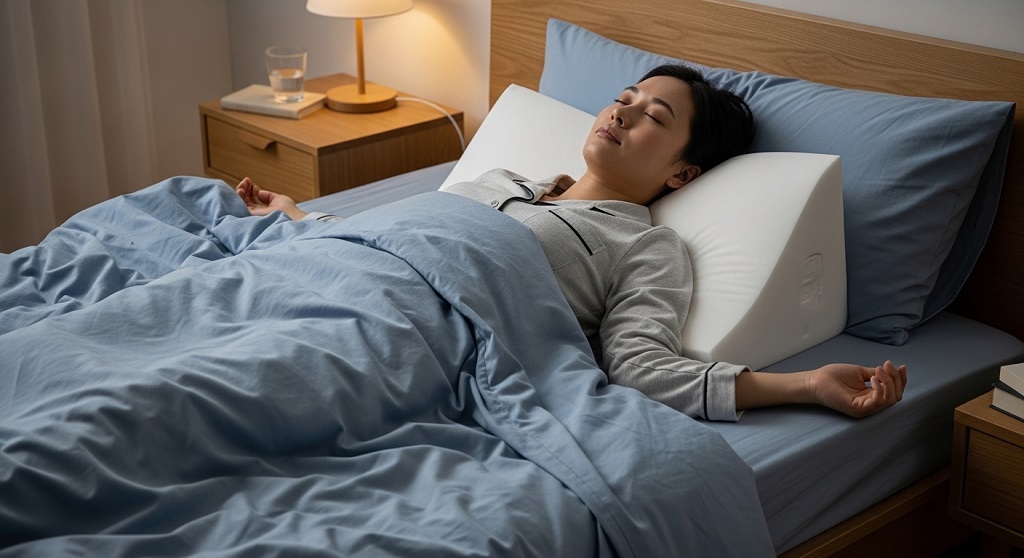
A wedge pillow sleeping position means elevating your upper body or legs at a controlled angle—usually between 30 and 45 degrees—to improve breathing, reduce reflux, and support spinal alignment during sleep.
Many people wake up with neck stiffness, blocked breathing, or acid reflux without realizing their sleeping posture is the real cause. Flat pillows often collapse overnight. That forces the airway to narrow and the spine to bend. A wedge pillow changes that angle. It keeps your torso stable and reduces pressure on sensitive areas like the chest, back, and shoulders.
Clinical sleep positioning research shows that elevating the upper body by about 6–8 inches can reduce nighttime reflux symptoms and improve airflow in mild positional sleep apnea cases. That is why wedge pillows are widely used for recovery after surgery, pregnancy support, and chronic snoring relief.
This guide explains exactly how to adjust your sleeping position using a wedge pillow step by step. You will learn the right angles, placements, and posture corrections that make the biggest difference.
What Is the Correct Wedge Pillow Sleeping Position?
The correct wedge pillow sleeping position keeps your head, neck, and torso aligned at a gentle incline without bending the spine.
Most people place a wedge pillow incorrectly under only the head. That creates neck strain instead of relief. The pillow should support the upper back through the head as one continuous surface.
This small adjustment improves airflow and reduces pressure on the lower spine.
How to Position It Properly
- Place the wide base at the mattress level
- Let the slope support your shoulders, not just your neck
- Keep your chin neutral, not tilted forward
- Maintain a straight spine from hips to head
When done correctly, your airway stays open longer during sleep. That reduces tossing and improves sleep stability.
This step solves the biggest mistake most wedge pillow users make.
Why Should You Adjust Your Sleeping Position with a Wedge Pillow?

You should adjust your sleeping position with a wedge pillow to reduce reflux, improve breathing, and protect spinal alignment.
Many sleep problems start with posture. A flat surface forces gravity to work against your airway and digestion.
Here is what typically happens without elevation:
- Stomach acid moves upward
- The tongue falls backward during sleep
- The lower spine twists
- Chest pressure increases
This creates interrupted sleep cycles.
Elevation changes how gravity interacts with your body. Studies in positional therapy show that upper-body elevation can reduce nighttime reflux episodes and lower airway collapse risk in mild snoring cases.
That is why wedge pillows are often recommended after surgery, during pregnancy, and for chronic breathing discomfort.
How Do You Sleep on Your Back Using a Wedge Pillow Correctly?
To sleep on your back with a wedge pillow, place the slope under your upper torso so your chest and head stay elevated together.
This is the most common wedge pillow sleeping position.
Back sleeping works best for:
- Acid reflux
- Snoring
- Sleep apnea positioning support
- Neck stiffness
- Post-surgery recovery
Step-by-Step Back Sleeping Setup
- Slide the wedge under your shoulders
- Keep your lower back flat on the mattress
- Add a small pillow under knees if needed
- Relax your shoulders downward
This position keeps your airway open and reduces pressure on the stomach.
Many users report fewer nighttime awakenings after switching to this setup.
Can You Sleep on Your Side with a Wedge Pillow?
Yes, you can sleep on your side with a wedge pillow by aligning your torso along the slope and supporting your neck with a secondary pillow.
Side sleeping works well for people who cannot stay on their back overnight.
However, alignment matters more in this position.
Side Sleeping Alignment Tips
- Keep your shoulder resting naturally on the mattress
- Let the wedge support your rib cage
- Use a neck pillow for head balance
- Place a pillow between knees
This prevents spinal rotation and reduces hip pressure.
Positional sleep studies show side elevation reduces snoring intensity in many cases compared to flat back sleeping.
How Does a Wedge Pillow Help with Acid Reflux at Night?
A wedge pillow helps acid reflux by keeping stomach acid below the esophagus during sleep.
Gravity plays a major role in nighttime reflux symptoms. When lying flat, acid can move upward more easily.
Elevation changes that direction.
Recommended Elevation Angle for Reflux Relief
| Condition | Suggested Elevation |
|---|---|
| Mild reflux | 6 inches |
| Moderate reflux | 8 inches |
| Chronic GERD symptoms | 10–12 inches |
Clinical gastroenterology guidelines commonly recommend head-of-bed elevation as part of lifestyle treatment for nighttime reflux.
A wedge pillow provides this elevation without stacking multiple pillows.
Can a Wedge Pillow Improve Breathing While Sleeping?
Yes, a wedge pillow improves breathing by reducing airway compression and supporting chest expansion.
When lying flat, the tongue and soft tissues move backward. That narrows airflow.
Elevation keeps those structures forward.
Breathing Benefits Include
- Reduced snoring frequency
- Improved oxygen flow
- Less chest pressure
- Better nasal airflow
Sleep positioning research suggests upper-body elevation can reduce apnea severity in positional sleep apnea cases.
It is not a replacement for medical treatment but often improves comfort significantly.
What Is the Best Wedge Pillow Angle for Sleeping Comfort?
The best wedge pillow angle for sleeping comfort ranges between 30 and 45 degrees depending on your condition.
Choosing the wrong angle can reduce effectiveness.
Angle Selection Guide
- 30 degrees: general comfort and posture correction
- 35 degrees: snoring and breathing support
- 40 degrees: reflux prevention
- 45 degrees: post-surgery recovery
Start with a lower incline and adjust gradually.
Your body adapts faster when changes are progressive.
How Do You Prevent Neck Pain While Using a Wedge Pillow?
You prevent neck pain by supporting the entire upper torso instead of only the head.
This is the most common positioning mistake.
Neck strain happens when the wedge acts like a standard pillow.
Simple Corrections That Work
- Slide the pillow lower toward shoulders
- Keep your chin level
- Add a thin head pillow if needed
- Avoid steep angles at first
Proper alignment reduces muscle tension overnight.
Many users notice fewer morning headaches after adjusting placement.
Can a Wedge Pillow Support Recovery After Surgery?
Yes, wedge pillows support recovery after surgery by reducing swelling and minimizing movement strain.
Doctors often recommend elevated sleeping after procedures involving:
- Shoulders
- Back
- Chest
- Sinuses
- Abdomen
Elevation improves circulation and prevents fluid buildup.
Case observations in orthopedic recovery programs show patients using incline support often report improved comfort during early healing stages.
Always follow medical guidance for exact positioning.
How Long Does It Take to Adjust to Sleeping on a Wedge Pillow?
Most people adjust to a wedge pillow sleeping position within 3 to 7 nights.
Your body needs time to adapt to a new angle.
Some users experience temporary stiffness early on.
How to Adapt Faster
- Start with shorter naps first
- Use a lower incline initially
- Add knee support if needed
- Keep shoulders relaxed
Gradual adjustment improves long-term comfort.
Consistency is the key factor.
What Mistakes Should You Avoid When Using a Wedge Pillow?
The biggest wedge pillow mistakes include incorrect placement, steep angles, and poor spinal alignment.
These errors reduce the benefits.
Common Mistakes to Avoid
- Placing only the head on the wedge
- Sleeping too close to the edge
- Using multiple stacked pillows instead
- Choosing the wrong height
Correct positioning improves results quickly.
Small adjustments create noticeable comfort changes.
Conclusion: How Can You Get the Most Benefits from a Wedge Pillow Sleeping Position?
The wedge pillow sleeping position works best when your upper body stays elevated in a straight line from shoulders to head. That alignment improves breathing, digestion, and spinal balance at the same time.
Many people struggle with sleep discomfort because they focus only on mattresses or standard pillows. Changing elevation often produces faster improvement. A wedge pillow creates consistent support that remains stable throughout the night.
If you experience reflux symptoms, snoring, or back tension, adjusting your sleep angle can make a measurable difference within days. Start with a moderate incline and refine your placement gradually.
Try adjusting your sleeping position tonight using a wedge pillow and observe how your breathing, posture, and comfort change over the next week.
Frequently Asked Questions About Wedge Pillow Sleeping Position
Is it safe to sleep on a wedge pillow every night?
Yes. Sleeping on a wedge pillow every night is safe when your spine stays aligned and the incline matches your comfort needs. Many people use it long term for reflux and breathing support.
What height wedge pillow is best for sleeping?
A wedge pillow between 6 and 10 inches works best for most sleepers. Lower heights support posture correction, while higher elevations help reflux relief.
Can a wedge pillow reduce snoring?
Yes. Elevating the upper body reduces airway collapse risk, which can lower snoring intensity in positional snoring cases.
Should shoulders rest on a wedge pillow?
Yes. Shoulders should rest on the wedge pillow so the spine remains aligned. Supporting only the head increases neck strain.
Can side sleepers use wedge pillows comfortably?
Yes. Side sleepers can use wedge pillows by aligning their torso with the slope and placing a pillow between their knees for balance.
Do wedge pillows help with sleep apnea?
They may help mild positional sleep apnea by improving airflow, but they are not a replacement for medical therapy such as CPAP treatment.
Read More Also: The Easiest Way to Save Links for Tik Tok Videos
Discover More: The Easy Guide to Installing Magisk Without TWRP