
Understanding hook sizes is crucial for any angler looking to improve their fishing success. Whether you’re targeting bass, saltwater species, or freshwater game fish, knowing how to properly measure and select hooks can make the difference between a successful day on the water and going home empty-handed. Fishing Gear Shops offers comprehensive resources to help anglers make informed decisions about their tackle selection.
Hook sizing can be confusing for beginners and experienced anglers alike. The numbering system seems counterintuitive at first glance. However, once you understand the fundamentals, selecting the right hook becomes second nature. This comprehensive guide will walk you through everything you need to know about measurements of 4/0 and 3/0 hooks and provide practical tips for measuring them accurately.
Additionally, proper hook measurement goes beyond just knowing the size number. Understanding the various dimensions of a hook, including gap width, shank length, and overall height, will help you make better choices for specific fishing situations.
Understanding Hook Size Numbers
The hook sizing system follows a unique numbering pattern that differs from most other measurement systems. Smaller hooks start with larger numbers, such as size 12, 10, or 8. As hooks get larger, the numbers decrease toward size 1. Therefore, a size 8 hook is smaller than a size 4 hook.
Once you reach size 1, the system switches to the “aught” or “/0” designation. The smallest aught size is 1/0, followed by 2/0, 3/0, 4/0, and so on. Consequently, larger numbers in the aught system indicate bigger hooks. This means a 4/0 hook is larger than a 3/0 hook.
Furthermore, this system has been standardized across most hook manufacturers worldwide. However, slight variations can occur between brands due to manufacturing tolerances and design differences.
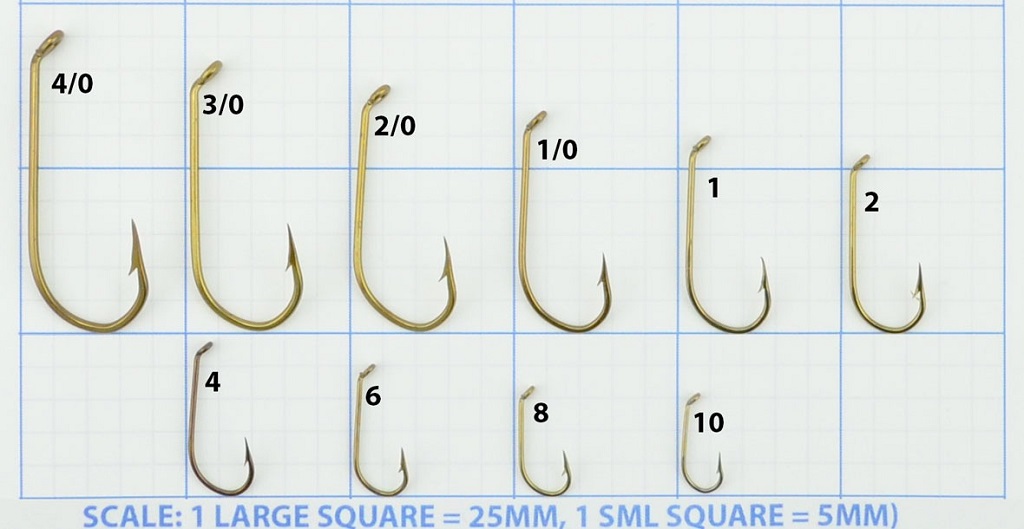
Key Dimensions of 4/0 and 3/0 Hooks
4/0 Hook Measurements
A standard 4/0 hook typically measures approximately 1.5 inches in total length. The gap width, which is the distance between the hook point and the shank, usually measures around 0.75 inches. Meanwhile, the shank length varies depending on the hook style but generally ranges from 0.8 to 1.2 inches.
The wire diameter of a 4/0 hook commonly falls between 0.08 and 0.12 inches. This thickness provides the strength needed for larger fish while maintaining reasonable penetration ability. Additionally, the bend diameter measures roughly 0.85 inches on most standard patterns.
3/0 Hook Measurements
A 3/0 hook is slightly smaller than its 4/0 counterpart. The total length typically measures around 1.3 inches. The gap width usually spans approximately 0.65 inches, making it suitable for medium-sized baits and fish.
Moreover, the shank length on a 3/0 hook generally ranges from 0.7 to 1.0 inches. The wire diameter is typically between 0.07 and 0.10 inches. These dimensions make 3/0 hooks versatile for various fishing applications.
How to Measure Hooks Accurately
Using a Ruler or Caliper
The most accurate way to measure hooks involves using a ruler or digital caliper. Place the hook on a flat surface and measure from the top of the eye to the bottom of the bend. This gives you the total length measurement.
Next, measure the gap width by positioning your measuring tool perpendicular to the shank. Measure from the inner edge of the hook point to the inner edge of the shank. This measurement is crucial for determining bait compatibility.
Measuring Without Tools
When precise measuring tools aren’t available, you can use common objects for reference. A standard paperclip measures about 2 inches long, which can help estimate hook sizes. Similarly, a quarter dollar coin has a diameter of approximately 0.955 inches.
However, these methods provide only rough estimates. For precise measurements, especially when tying flies or matching specific bait sizes, proper measuring tools are essential.
Practical Applications and Fish Species
4/0 Hook Usage
4/0 hooks excel for targeting medium to large fish species. They work exceptionally well for bass fishing, particularly when using larger soft plastics or live bait. Saltwater anglers frequently choose 4/0 hooks for species like redfish, snook, and smaller tarpon.
These hooks also perform well with chunk baits, large worms, and swimbaits. The substantial gap accommodates bulky presentations while providing reliable hooksets. Additionally, 4/0 hooks offer the strength needed for fighting powerful fish in heavy cover.
3/0 Hook Applications
3/0 hooks provide versatility for various fishing situations. They work well for medium-sized bass, walleye, and trout fishing. Saltwater applications include targeting species like flounder, sea trout, and smaller drum.
Furthermore, 3/0 hooks are excellent choices for finesse presentations where a slightly smaller profile is beneficial. They penetrate easily while still providing adequate holding power for most game fish.
Factors Affecting Hook Selection
Bait Size Considerations
The size of your bait largely determines the appropriate hook size. As a general rule, the hook should not overpower the bait or appear obviously artificial. For live minnows measuring 3-4 inches, a 3/0 hook typically works well.
Larger baits, such as 5-6 inch shiners or substantial soft plastics, often require 4/0 hooks. The hook must be large enough to penetrate beyond the bait and into the fish’s mouth. Therefore, matching hook size to bait size is critical for success.
Target Species Requirements
Different fish species have varying mouth sizes and feeding behaviors. Largemouth bass have large mouths that can accommodate 4/0 hooks easily. Conversely, species with smaller mouths might require 3/0 or even smaller hooks for optimal presentation.
Moreover, consider the fish’s fighting ability when selecting hook size. Stronger fish require heavier wire hooks, while lighter wire hooks provide better penetration for species with hard mouths.
Common Measurement Mistakes to Avoid
Inconsistent Measuring Points
Many anglers make mistakes by measuring from different reference points. Always measure total length from the top of the eye to the bottom of the bend. Gap measurements should always be taken at the widest point between the hook point and shank.
Ignoring Hook Style Variations
Different hook styles can have significantly different measurements even within the same size category. Wide gap hooks have larger gaps than standard hooks of the same size number. Long shank hooks will measure longer than short shank versions.
Therefore, understanding these variations helps ensure you select the appropriate hook for your specific needs. According to Field & Stream, hook selection is one of the most critical factors in fishing success.
Professional Tips for Hook Measurement
Creating a Reference Chart
Experienced anglers often create personal reference charts showing actual measurements of their most-used hooks. This eliminates guesswork and ensures consistency in tackle selection. Take measurements of hooks from different manufacturers to understand variations between brands.
Using Hook Gauges
Professional tackle shops and serious anglers sometimes use specialized hook gauges. These tools provide quick, accurate size identification without detailed measurements. However, they work best when you’re familiar with the specific gauge being used.
Maintenance and Storage Considerations
Proper storage helps maintain hook integrity and measurement accuracy. Rust and corrosion can alter hook dimensions and weaken the metal. Store hooks in dry conditions and consider using rust preventatives in humid environments.
Additionally, organize hooks by size and style to make selection easier on the water. Clear tackle boxes with labeled compartments help maintain organization and protect hook points from damage.
Read More Also: Will Crypto Finally Break the Chains of Centralization?
Conclusion
Mastering hook measurements, particularly for 4/0 and 3/0 sizes, significantly improves your fishing effectiveness. Understanding the key dimensions, proper measuring techniques, and practical applications helps you make informed tackle selections. Remember that 4/0 hooks measure approximately 1.5 inches total length with 0.75-inch gaps, while 3/0 hooks are slightly smaller at 1.3 inches total length with 0.65-inch gaps.
Consistent measurement practices and understanding the relationship between hook size, bait selection, and target species will enhance your fishing success. Whether you’re pursuing bass in freshwater or targeting coastal species, proper hook selection based on accurate measurements forms the foundation of successful angling.
Read More Also: What Are the Latest Innovations Shaping the World of Hardware and Gadgets?
Frequently Asked Questions
Q: What’s the actual size difference between 3/0 and 4/0 hooks?
A: A 4/0 hook is approximately 0.2 inches longer and has a gap about 0.1 inches wider than a 3/0 hook. The wire diameter is also slightly thicker on 4/0 hooks.
Q: Can I use 4/0 hooks for smaller fish species?
A: While possible, 4/0 hooks may be too large for smaller fish species. They can reduce bite detection and may not penetrate properly in fish with smaller mouths. Consider 3/0 or smaller hooks for better results.
Q: Do hook measurements vary between manufacturers?
A: Yes, slight variations exist between manufacturers due to different manufacturing processes and design philosophies. Always verify measurements when switching between brands, especially for critical applications.
Q: How do I measure circle hooks compared to J-hooks?
A: Use the same measuring points for both styles. However, circle hooks often have different proportions, with wider gaps relative to their length. The total length and gap measurements remain the standard reference points.
Q: Should I measure hooks before or after sharpening?
A: Measure hooks in their factory condition before any modifications. Sharpening typically removes minimal material and won’t significantly affect overall measurements, but it’s best to establish baseline measurements first.