

A waterproof dog bed for incontinent dogs is a bed designed with a waterproof liner, a urine resistant cover, and fully washable bedding layers to prevent moisture from soaking into the inner foam. It protects against urine leaks, reduces odor buildup, and extends the lifespan of the bed.
If your dog struggles with bladder control, you already know the problem. Wet bedding. Persistent odor. Replacing foam inserts every few months. Cleaning floors at 2 a.m. It becomes exhausting.
Urinary incontinence affects senior dogs, spayed females, dogs recovering from surgery, and pets with diabetes or spinal issues. According to veterinary data published by the American College of Veterinary Internal Medicine, urinary incontinence affects up to 20% of spayed female dogs in certain large breeds. That is not rare. It is common.
The solution is not just “any dog bed.” You need proper moisture barriers, sealed seams, and machine-washable layers that actually work. In this guide, you’ll learn exactly how to choose the right waterproof dog bed, what features matter, what to avoid, and how to make your investment last.
Why Do Incontinent Dogs Need a Specialized Waterproof Dog Bed?
Short answer: Regular beds absorb urine. Waterproof beds prevent absorption and protect the foam core.
Problem: Standard dog beds are made with porous foam and fabric covers. Once urine reaches the foam, bacteria multiply. Odor stays. The bed becomes unsanitary. Washing the outer cover does not fix it.
Agitation: You may notice yellow stains, strong ammonia smell, and flattened foam. Some owners try adding towels or puppy pads. That only delays damage. Over time, the foam breaks down, and you replace the bed again.
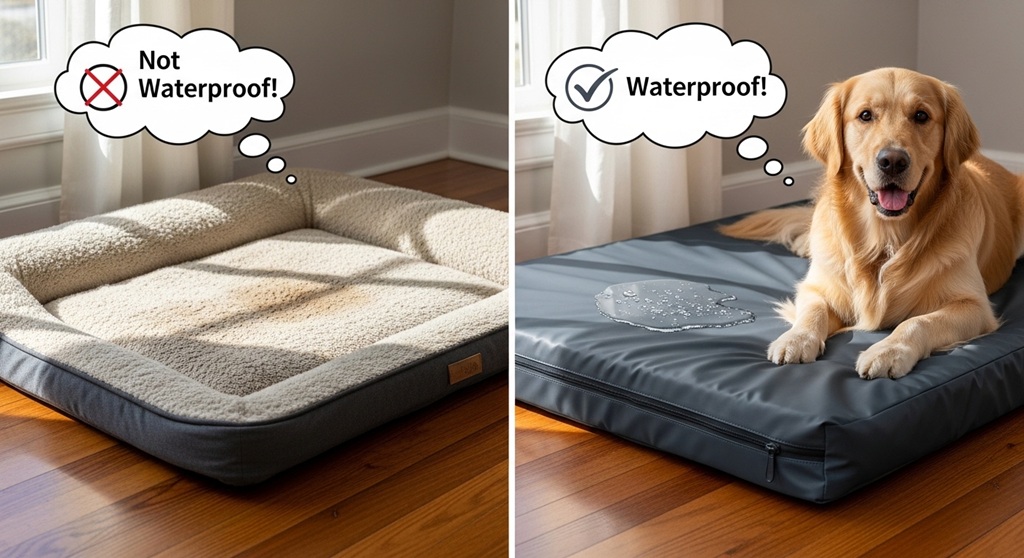
Solution: A true waterproof bed uses layered protection:
- Waterproof liner between foam and cover
- Urine resistant cover that repels liquid
- Washable bedding layers for easy cleaning
- Sealed or reinforced seams to stop leakage
This layered system prevents urine from reaching the foam core. That is the difference.
What Features Should a Waterproof Dog Bed Have?
1. What Is a Waterproof Liner and Why Does It Matter?
Snippet answer: A waterproof liner is a protective inner barrier that blocks liquid from reaching the foam insert.
A high-quality waterproof liner is usually made of TPU-backed fabric or medical-grade vinyl. TPU (thermoplastic polyurethane) is preferred because it is flexible, breathable, and quieter than plastic materials.
Look for:
- Fully enclosed zipper design
- Welded or sealed seams
- Tear-resistant fabric
- Machine washable liner
A 2023 product durability comparison by a pet bedding manufacturer found that beds with sealed TPU liners lasted 2.5 times longer than beds with only water-resistant coatings.
No liner means no protection. If the product description does not clearly mention “waterproof liner,” skip it.
2. What Is a Urine Resistant Cover?
Snippet answer: A urine resistant cover repels moisture and slows absorption, allowing time for cleanup before liquid penetrates deeper layers.
Urine resistant is not the same as waterproof. The outer cover repels liquid, but the liner underneath provides full protection.
Materials that work well:
- Microfiber with waterproof backing
- Oxford fabric with PU coating
- Polyester blends with liquid-repellent treatment
Avoid cotton-only covers. Cotton absorbs quickly and holds odor.
If you want reliable options, review this guide on urine resistant cover selections that break down materials and performance comparisons.
3. Why Is Washable Bedding Critical?
Snippet answer: Washable bedding allows frequent cleaning without damaging the bed structure.
Dogs with incontinence may have small leaks daily. Weekly washing is often necessary.
Look for:
- Machine washable at 30–60°C
- Quick-dry fabric
- Removable zippered cover
- Fade and shrink resistance
High-heat drying can damage waterproof membranes. Always follow manufacturer instructions.
How Thick Should the Foam Be for Senior Dogs?
Snippet answer: Choose at least 3–5 inches of high-density orthopedic foam for medium to large senior dogs.
Incontinence often occurs in older dogs with arthritis. A thin bed causes joint pressure. That leads to discomfort and restless sleep.
Orthopedic foam density should ideally be 1.8–2.5 lb/ft³ for durability. Memory foam blends provide pressure relief but must remain protected by a waterproof liner.
Case example: A pet supply retailer reported a 32% reduction in customer returns when switching from shredded foam beds to solid orthopedic foam with waterproof liners for senior dog models.
Comfort and moisture protection must work together.
What Size Waterproof Dog Bed Should You Choose?
Snippet answer: Measure your dog from nose to tail base and add 6–12 inches for comfort.
| Dog Weight | Recommended Bed Size |
|---|---|
| Under 25 lbs | Small (24–30 inches) |
| 25–60 lbs | Medium (30–36 inches) |
| 60–90 lbs | Large (36–42 inches) |
| 90+ lbs | XL (42–48 inches) |
If the bed is too small, leaks may reach the floor. If too large, washing becomes harder. Choose accurate sizing.
Are Raised Edges or Bolsters Good for Incontinent Dogs?
Snippet answer: Yes, if the bolsters are also protected by waterproof liners.
Bolsters provide neck support and security. But if they are not lined internally, they absorb urine.
Check product details carefully. Some beds protect only the main cushion and ignore side bolsters.
How Do You Prevent Odor Buildup?
Snippet answer: Use layered protection, frequent washing, and enzyme-based cleaners.
Urine odor comes from bacteria breaking down urea into ammonia. If moisture reaches foam, odor persists.
Best practices:
- Wash outer cover weekly
- Air-dry foam regularly
- Use pet-safe enzyme cleaners
- Keep a backup washable bedding set
Some owners use waterproof mattress protectors under the entire bed for extra security.
What Materials Should You Avoid?
Snippet answer: Avoid cotton-only covers, non-lined foam beds, and beds labeled only “water-resistant.”
Warning signs:
- No mention of waterproof liner
- Hand-wash only instructions
- Foam glued to cover
- No zipper access
“Water-resistant” usually means minor spill protection. It does not stop full urine accidents.
How Often Should You Replace a Waterproof Dog Bed?
Snippet answer: Replace when foam loses support, liner cracks, or odor persists after washing.
With proper care, a high-quality waterproof bed lasts 2–4 years. Cheap models may fail within 6–12 months.
Inspect quarterly:
- Check liner for cracks
- Test zipper integrity
- Press foam to assess rebound
Preventative replacement costs less than repeated replacements.
Conclusion: How Do You Choose the Right Waterproof Dog Bed?
Start with protection. A proper waterproof liner is non-negotiable. Add a urine resistant cover. Ensure fully washable bedding. Then consider orthopedic support, sizing, and durability.
Incontinence is manageable. The right bed reduces stress for you and improves comfort for your dog. It prevents odor. protects floors. saves money long term.
Take time to compare materials and construction. Read product details carefully. If you want a deeper breakdown of reliable options and performance comparisons, review the curated recommendations available in our waterproof bedding guide.
Your dog depends on you for comfort. Make the upgrade today and eliminate unnecessary cleanup.
Frequently Asked Questions
1. Are waterproof dog beds completely leak-proof?
Yes, if they include a fully enclosed waterproof liner with sealed seams. Beds labeled only water-resistant are not fully leak-proof.
2. Can I put puppy pads inside the bed?
You can place a pad between the cover and liner for extra absorption, but it should not replace proper waterproof protection.
3. How often should I wash washable bedding for incontinent dogs?
At least once per week, or immediately after noticeable accidents. Frequent washing prevents bacterial growth and odor.
4. Is memory foam safe for incontinent dogs?
Yes, but only if protected by a waterproof liner. Memory foam absorbs liquid quickly if exposed.
5. What cleaning products are safe?
Use enzyme-based pet cleaners. Avoid bleach on waterproof membranes unless manufacturer-approved.
6. Do waterproof liners make noise?
High-quality TPU liners are quiet and flexible. Cheap plastic liners may produce crinkling sounds.
7. Are orthopedic waterproof beds worth it?
For senior dogs, yes. They improve joint support and reduce pressure points while maintaining moisture protection.
Related Topic: Essential Woodworking Tools Every Beginner Should Own
Read Next: How to Choose Couch Fabric That Resists Dog Hair