
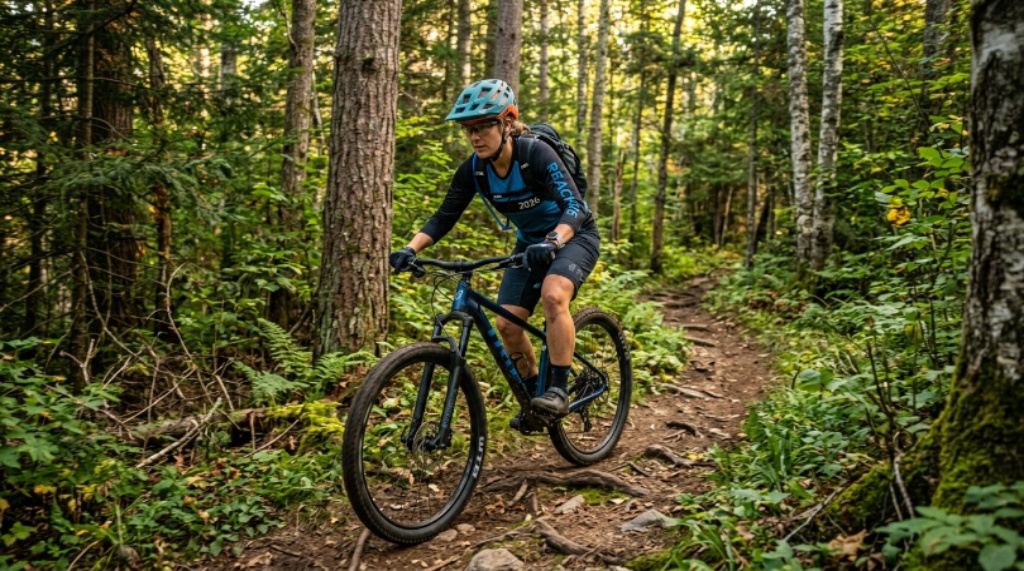
Finding a great mountain bike does not have to break the bank. In 2026, the market is full of solid options for riders who want real trail performance without spending a fortune. Whether you are completely new to the sport or simply watching your wallet, this guide will walk you through everything you need to know. From key features to look for, to smart buying tips, you will be ready to hit the trails with confidence.
Why Budget Mountain Bikes Have Never Been Better
A few years ago, spending less usually meant sacrificing a lot. That is no longer true. Manufacturers have improved their production methods significantly. As a result, affordable MTB options today offer components and geometry that used to cost twice as much. Brands are now putting quality drivetrains, decent suspension, and reliable brakes on bikes that fit a modest budget.
However, not every cheap bike is worth your money. Some cut corners in ways that matter. Therefore, knowing what to look for will save you from a frustrating purchase.
Set Your Budget Before You Start Shopping
The first step is simple: know your number. For trail riding in 2026, a realistic budget sits between $500 and $1,200. Below $500, you will mostly find department store bikes that are heavy and unreliable on actual trails. Above $1,200, you start entering mid-range territory with more premium parts.
Additionally, remember to factor in extras. Helmet, gloves, flat kit, and pedals can add $100 to $200 to your total cost. Plan for those from the beginning so there are no surprises later.
The Most Important Features to Prioritize
Not all features carry equal weight when you are on a budget. Focus on these first.
Frame Material
Aluminum is the sweet spot for budget buyers. It is light enough for trail riding and strong enough to last years. Steel frames are heavier but extremely durable. Carbon fiber is out of reach at this price point, and that is perfectly fine.
Look for a frame with solid geometry. A slacker head angle (around 66–68 degrees) gives better stability on descents. A longer wheelbase adds confidence at speed.
Wheel Size
The most common sizes are 27.5 inches and 29 inches. Both work well on trails. However, 29-inch wheels roll over obstacles more easily and maintain momentum better on flatter terrain. If you are taller than 5’8″, a 29er will likely feel more natural. Shorter riders often prefer 27.5 inches for its quicker handling feel.
Suspension Setup
A hardtail — meaning front suspension only — is the best choice for most budget trail riders. Full-suspension bikes at low price points often use poor-quality rear shocks that do not perform well and break down fast. A quality hardtail, on the other hand, is more efficient, lower maintenance, and more fun to ride at this budget level.
Look for at least 100mm to 120mm of fork travel for trail riding. Brands like RockShox and SR Suntour both offer capable forks in this range.
Brakes
Hydraulic disc brakes are far superior to mechanical disc brakes or rim brakes. They offer better stopping power and require less hand effort. Many entry-level trail bike models now include hydraulic disc brakes as standard. Do not settle for anything less if trail riding is your goal.
Drivetrain
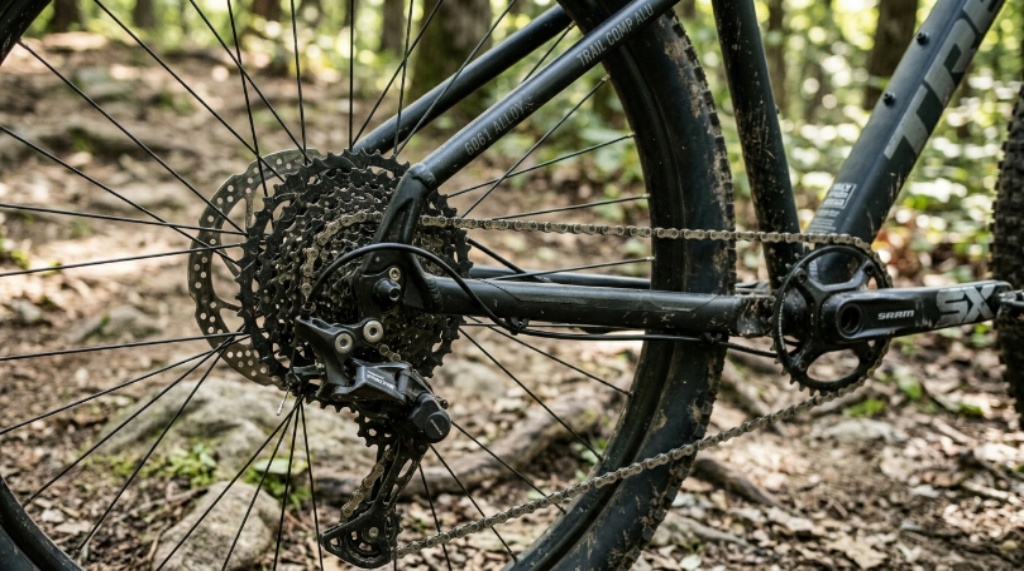
A 1x drivetrain (one chainring in the front, multiple gears in the rear) is now the standard for trail bikes. It is simpler, lighter, and less likely to drop your chain. Look for at least a 10-speed setup. Shimano Deore and SRAM SX Eagle are both excellent choices in this price bracket.
Hardtail vs. Full Suspension: The Budget Buyer’s Dilemma
This question comes up often. For trail riding on a budget, a hardtail almost always wins. Here is why.
Full-suspension bikes cost more to produce. At lower price points, manufacturers must cut costs somewhere. They usually cut on the rear shock quality, frame material, or drivetrain. That means you end up with a bike that feels sluggish and needs more maintenance.
A quality hardtail, on the other hand, uses its savings to give you a better fork, better brakes, and a better drivetrain. Additionally, hardtails teach you better riding technique. They reward smooth, deliberate pedaling and line choice — skills that make you a faster, more confident rider long-term.
Best Value Brands to Consider in 2026
Several brands consistently deliver strong performance at accessible prices. These are worth researching as you shop.
- Trek Marlin series — reliable geometry, good spec, widely available
- Giant Talon series — excellent value, proven components, great fit across sizes
- Specialized Rockhopper — a classic entry-level trail choice with strong resale value
- Marin Bolinas Ridge — newer entrant with competitive specs for the price
- Cannondale Trail series — solid aluminum frames with dependable parts
Each of these brands offers an entry-level trail bike that competes well against cheap mountain bikes reviews often highlight from no-name brands. Name recognition also matters for warranty support and parts availability down the road.
Where to Buy: New vs. Used
New bikes come with warranties and the assurance that nothing is worn out. However, buying used can stretch your budget significantly. A $700 budget spent on a used bike can sometimes get you components that originally cost $1,200 or more.
If you go the used route, inspect the bike carefully. Check the brake pads, chain wear, and condition of the fork seals. Look for cracks around the welds on the frame. If possible, take it to a local bike shop for a quick inspection before purchasing.
Additionally, platforms like Facebook Marketplace, Pinkbike Buy/Sell, and local bike co-ops are great places to find quality second-hand options.
Test Ride Before You Commit
If at all possible, test ride the bike before buying. Many local bike shops offer demo days, especially in spring and early summer. A bike that looks great on paper might feel awkward when you are actually on it.
Pay attention to how the handlebars feel, whether the saddle height adjusts to your comfort, and how confidently the bike corners. These small details make a big difference over hours of riding.
Conclusion
Finding the best budget mountain bike for trail riding in 2026 comes down to being smart about your priorities. Focus on a quality aluminum hardtail with hydraulic disc brakes, a 1x drivetrain, and a capable fork. Stick to reputable brands that offer solid warranties and widely available parts. Set a realistic budget, factor in accessories, and — whenever possible — test ride before you buy.
Affordable MTB options have never been better, and the right bike is genuinely out there for every budget. With the right information, you do not have to compromise on fun or performance to stay within your means. Get out there, find your bike, and start riding.
Frequently Asked Questions
What is a good price for a beginner mountain bike for trail riding?
For actual trail performance, plan to spend at least $500 to $700 for a new bike. Used bikes can offer better value in this range. Anything below $400 from a department store is unlikely to hold up on real trails.
Is a hardtail or full-suspension bike better for beginners?
A hardtail is almost always the better choice for beginners on a budget. It is more reliable, easier to maintain, and teaches better riding fundamentals. Full-suspension bikes at entry-level prices often have low-quality rear shocks that underperform.
What wheel size should I choose for trail riding?
Both 27.5-inch and 29-inch wheels work well on trails. Taller riders (above 5’8″) typically prefer 29-inch wheels for their stability and rollover ability. Shorter riders often find 27.5-inch wheels easier to handle and more agile.
Are hydraulic disc brakes really necessary on a budget bike?
For trail riding, yes. Hydraulic disc brakes provide consistent stopping power in wet and muddy conditions and require less effort from your hands. Many affordable entry-level trail bikes now include them as standard, so there is little reason to accept less.
Can I upgrade a cheap mountain bike later?
Yes, many components can be upgraded over time — brakes, drivetrain, saddle, pedals, and even the fork. However, the frame is permanent. Therefore, it is worth investing in a bike with a solid frame from a reputable brand, even if the rest of the components are basic.
Related Topics:
How to Save Money on Low Cost Mountain Bikes in 2026
How to Cast Surf Fishing Rigs for Maximum Distance